The 5 Space Types Every Hybrid Office Needs (and How to Integrate Them)
Hybrid offices need more than flexible schedules; they need spaces designed for how people truly work. Key areas include quiet focus zones for heads-down work, tech-enabled meeting rooms for seamless collaboration, social hubs for informal connection, touchdown desks for short-term tasks, and lockers for personal storage. Thoughtful design helps employees focus, collaborate, and feel supported no matter where they are.
Many organizations have embraced hybrid work with attendance structure and upgraded technology, only to find that performance, collaboration, and culture still feel out of sync. Flexibility alone isn’t solving the deeper challenges. Meetings remain fragmented, teams struggle to connect, and office spaces no longer align with how people actually work.
Hybrid work requires more than a mandate. It demands clear expectations, intentional leadership, and a workplace designed to complement new work patterns. The physical environment plays a pivotal role: the right spaces can enhance focus, connection, and collaboration.
In this article, we explore five essential workspace typologies to consider when designing a hybrid office, each supporting a different mode of work and elevating the employee experience.
These five space types anchor a well-functioning hybrid office: focus areas, tech-enabled meeting rooms, social hubs, touchdown desks, and personal storage/lockers.
Quiet focus areas in a hybrid office
A focus area is designed to support uninterrupted, heads-down work. These zones prioritize quiet, minimal visual stimulation, and protection from distractions from surrounding areas. When employees need to immerse themselves in a specific task, a peaceful, focused area can be beneficial.
Why Focus Areas Matter in Hybrid Office
When designing a hybrid office, organizations often prioritize collaboration spaces, assuming most focus work happens at home. But if the goal is to draw people back to the office with purpose, offering a range of work settings becomes essential. Without quiet areas, even minor interruptions can make it difficult to concentrate, slow down complex tasks, and leave employees feeling less effective. That’s when the home office starts to feel like the better choice.
As teams become more intentional about the days they spend together, the need for calm, distraction-free spaces only grows. Thoughtfully designed focus areas help balance the buzz of collaborative zones with the quiet required for deep, meaningful work, giving people the flexibility and support they need to do their best.
Creative ways to integrate focus areas into your hybrid workplace
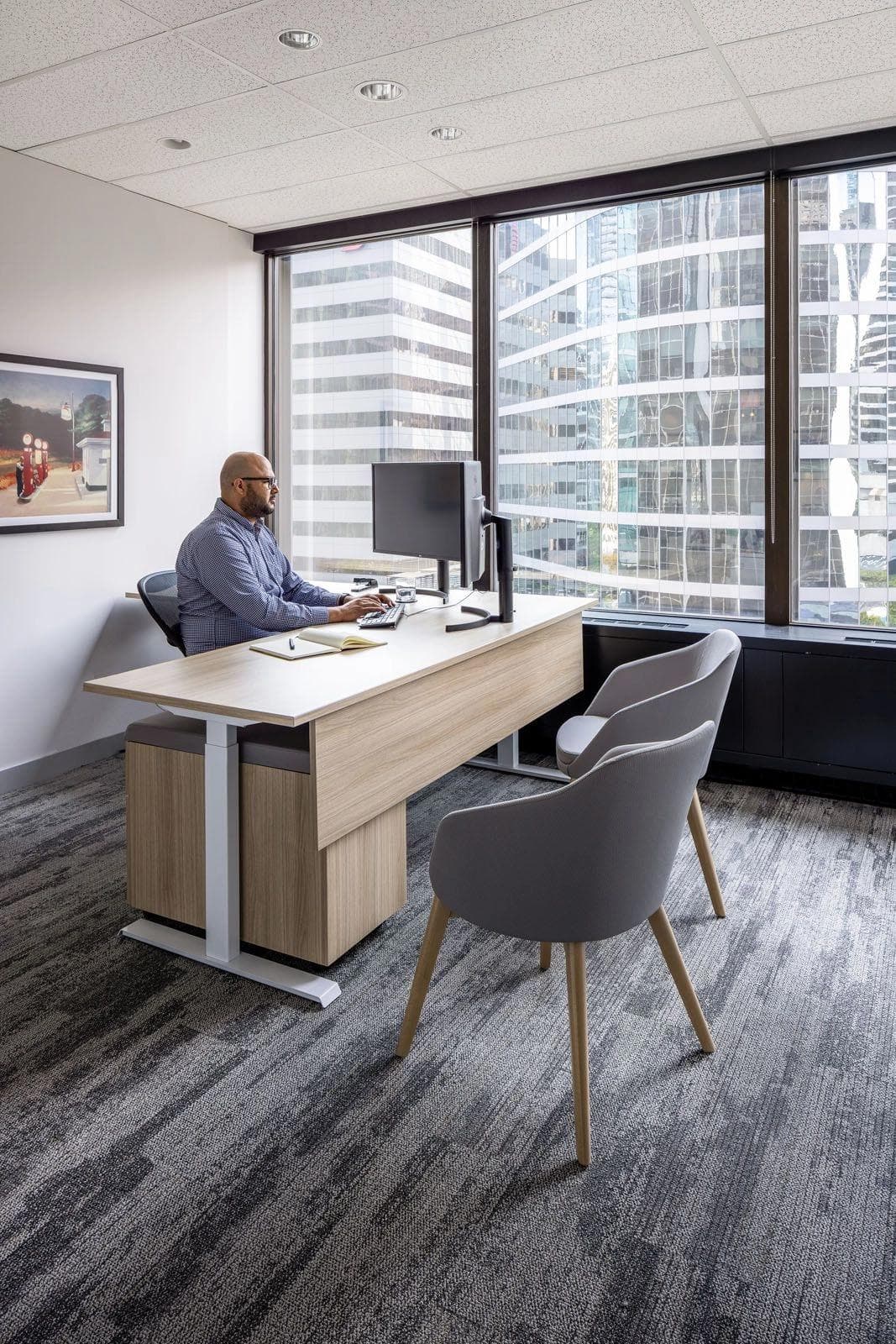
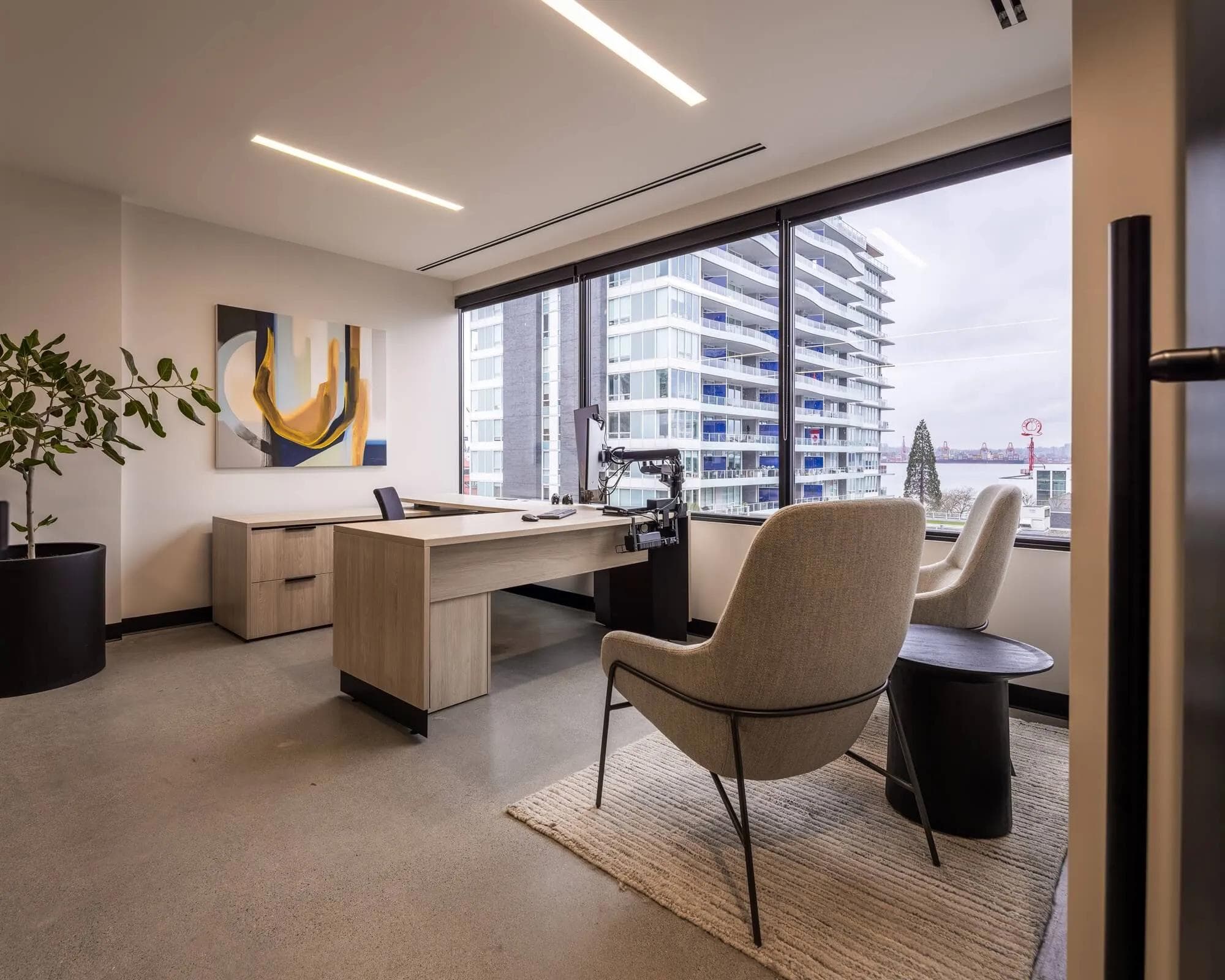
- Private Offices – Ideal for individuals who require complete privacy or handle sensitive work.
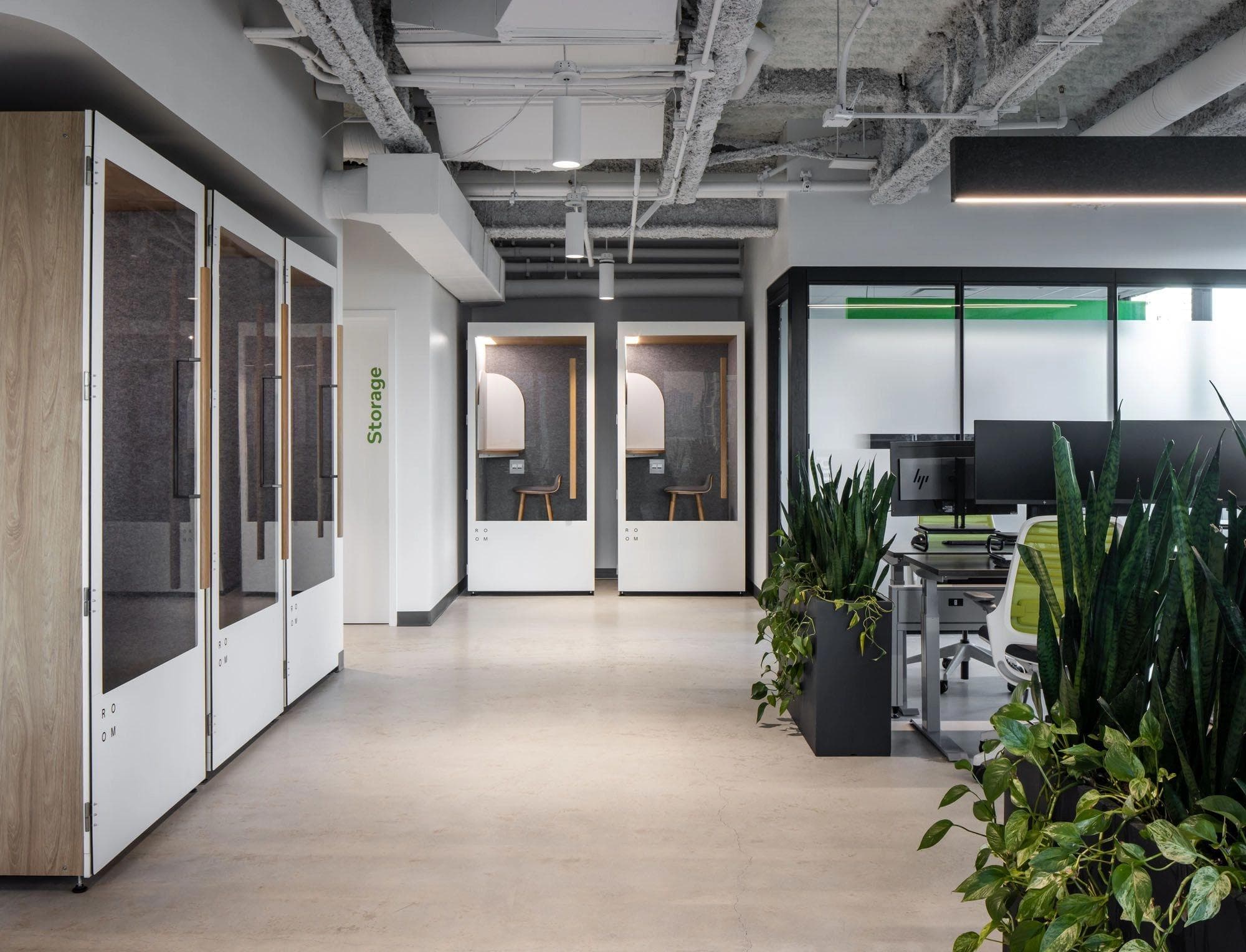
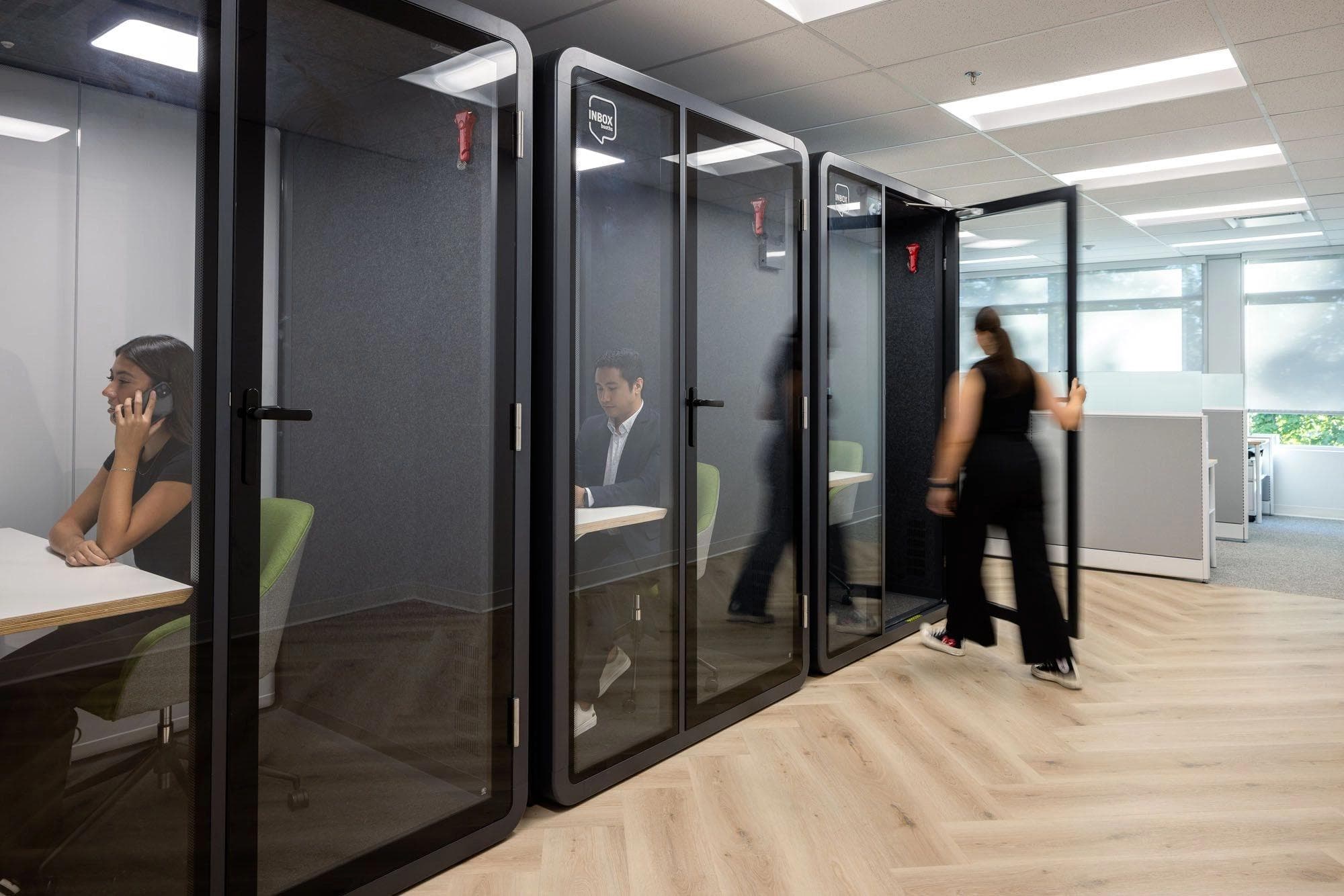
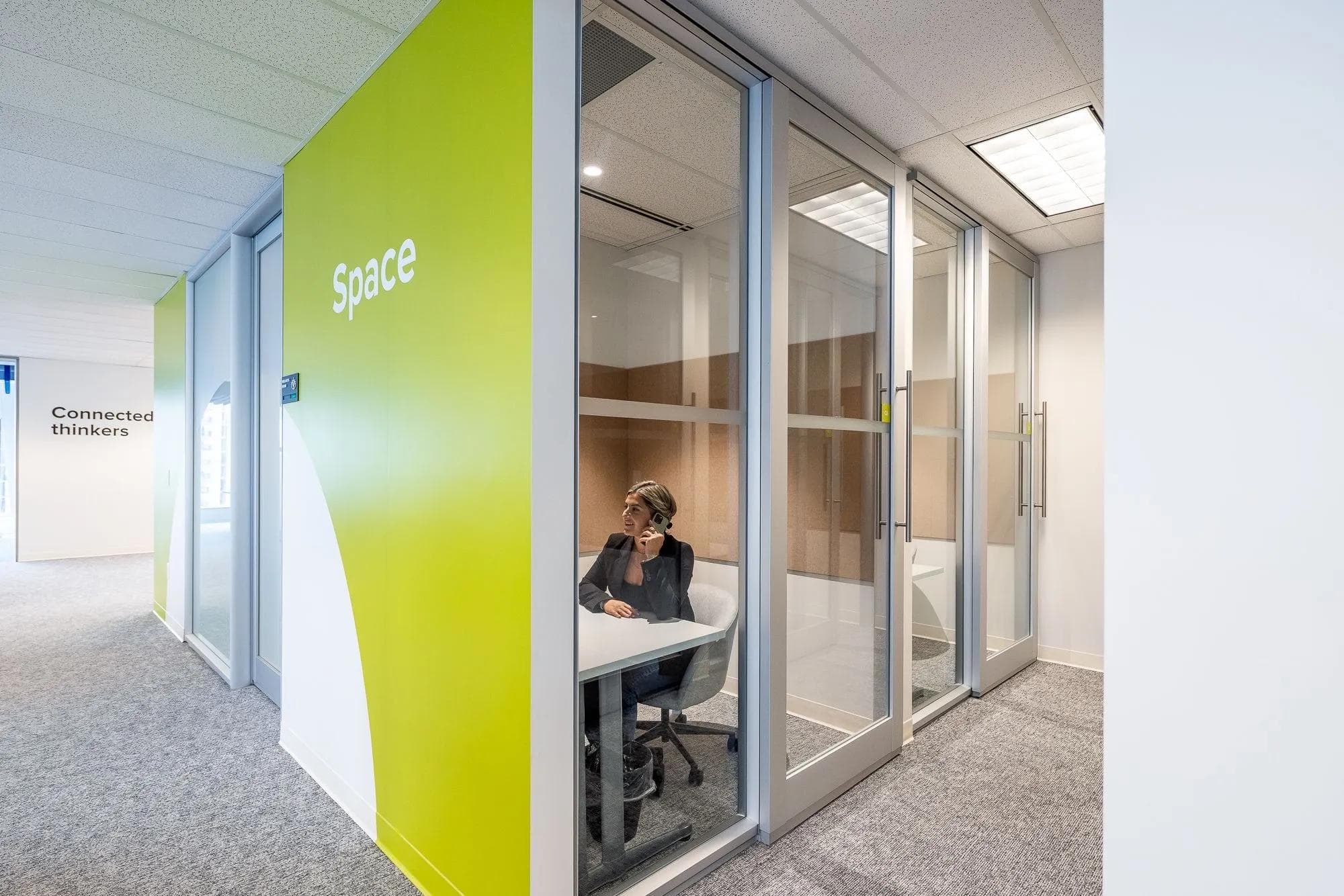
- Phone Booths – Enclosed micro-spaces offering quick access to quiet, distraction-free moments for calls or focused bursts of work.
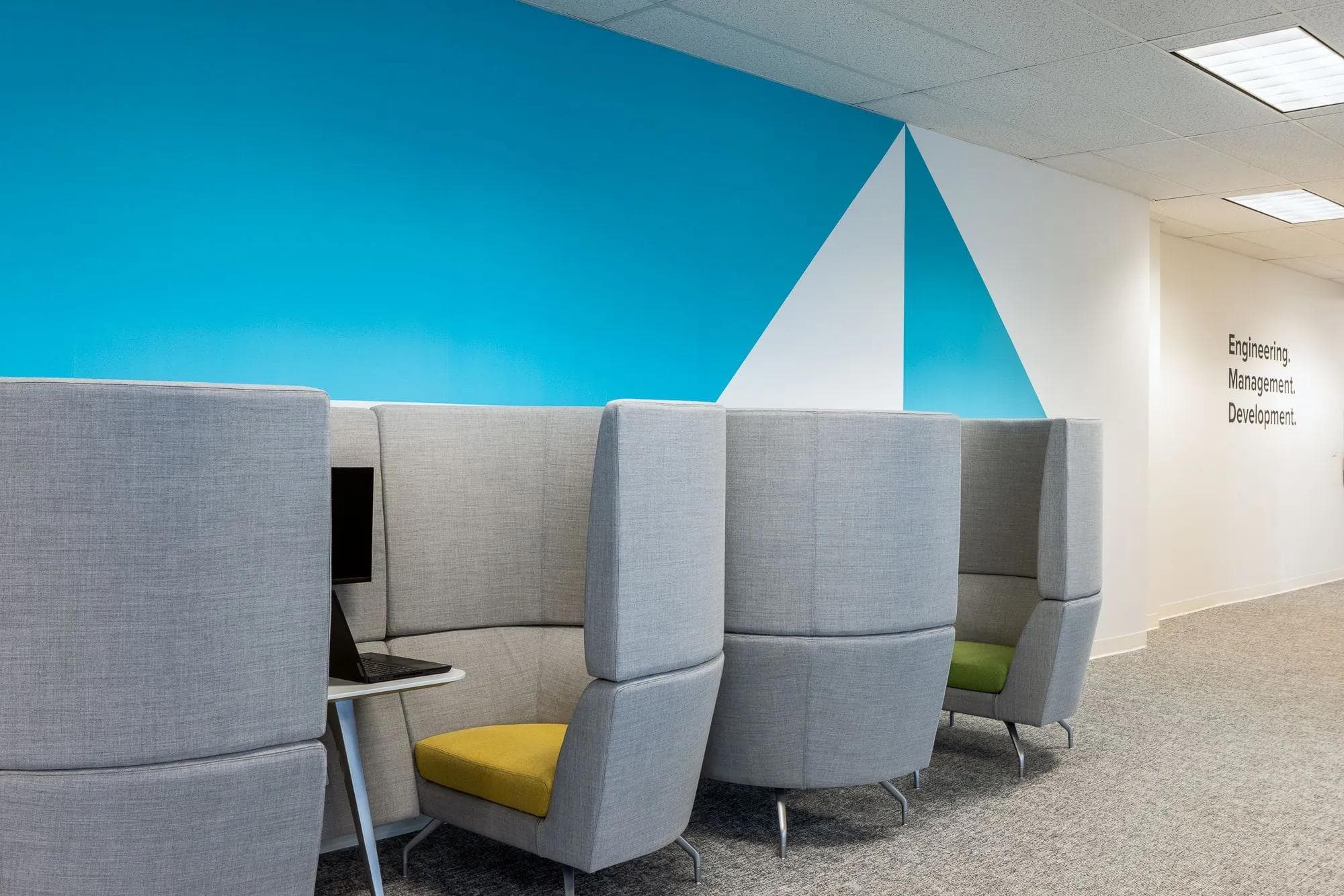
- Alcove Seating – Semi-enclosed nooks that provide visual privacy and a sense of retreat without requiring full rooms.
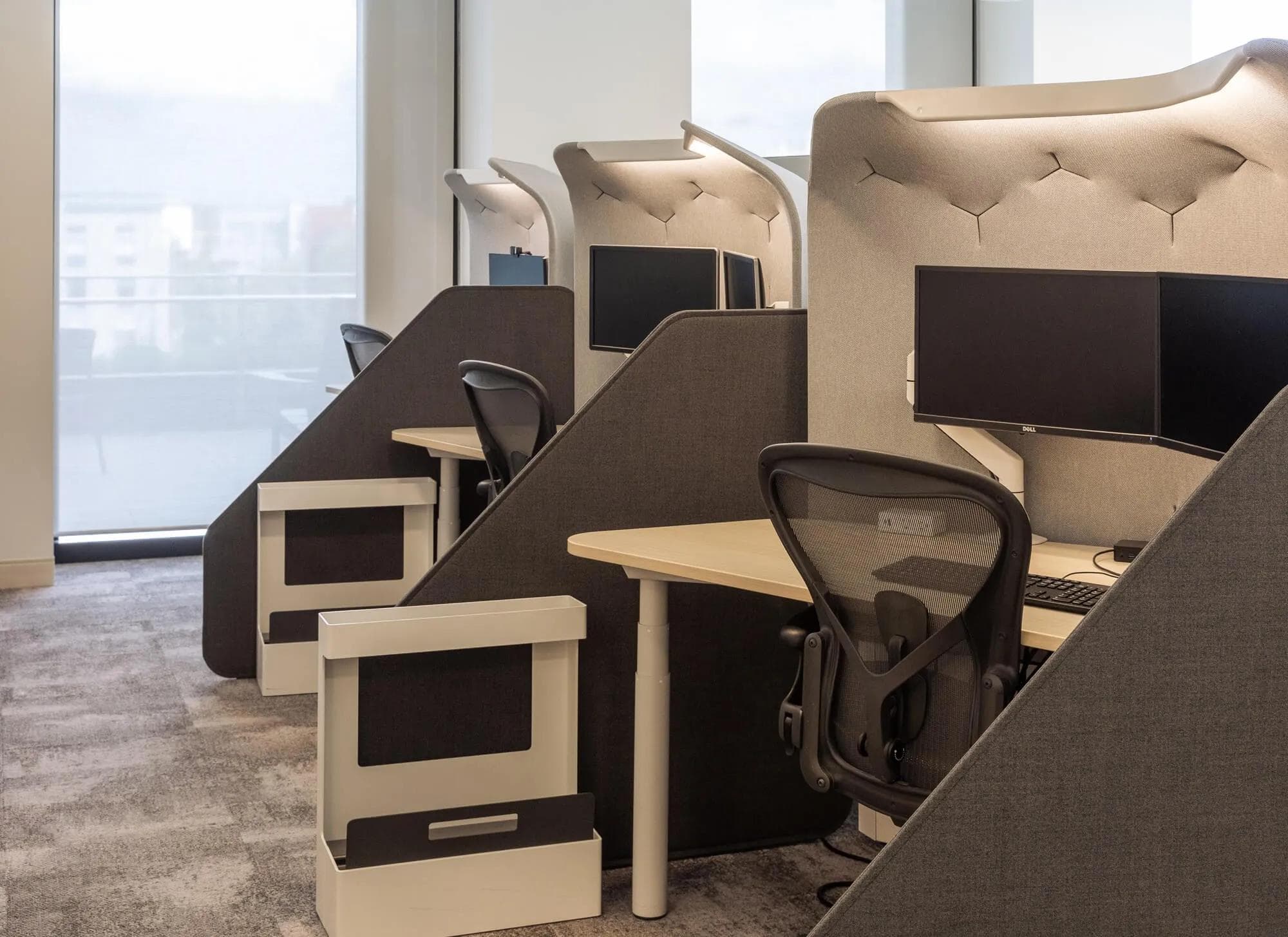
- Compact Soundproof Rooms – Small, acoustically controlled rooms that deliver maximum focus with minimal space requirements.
Tech-enabled meeting rooms for hybrid collaboration
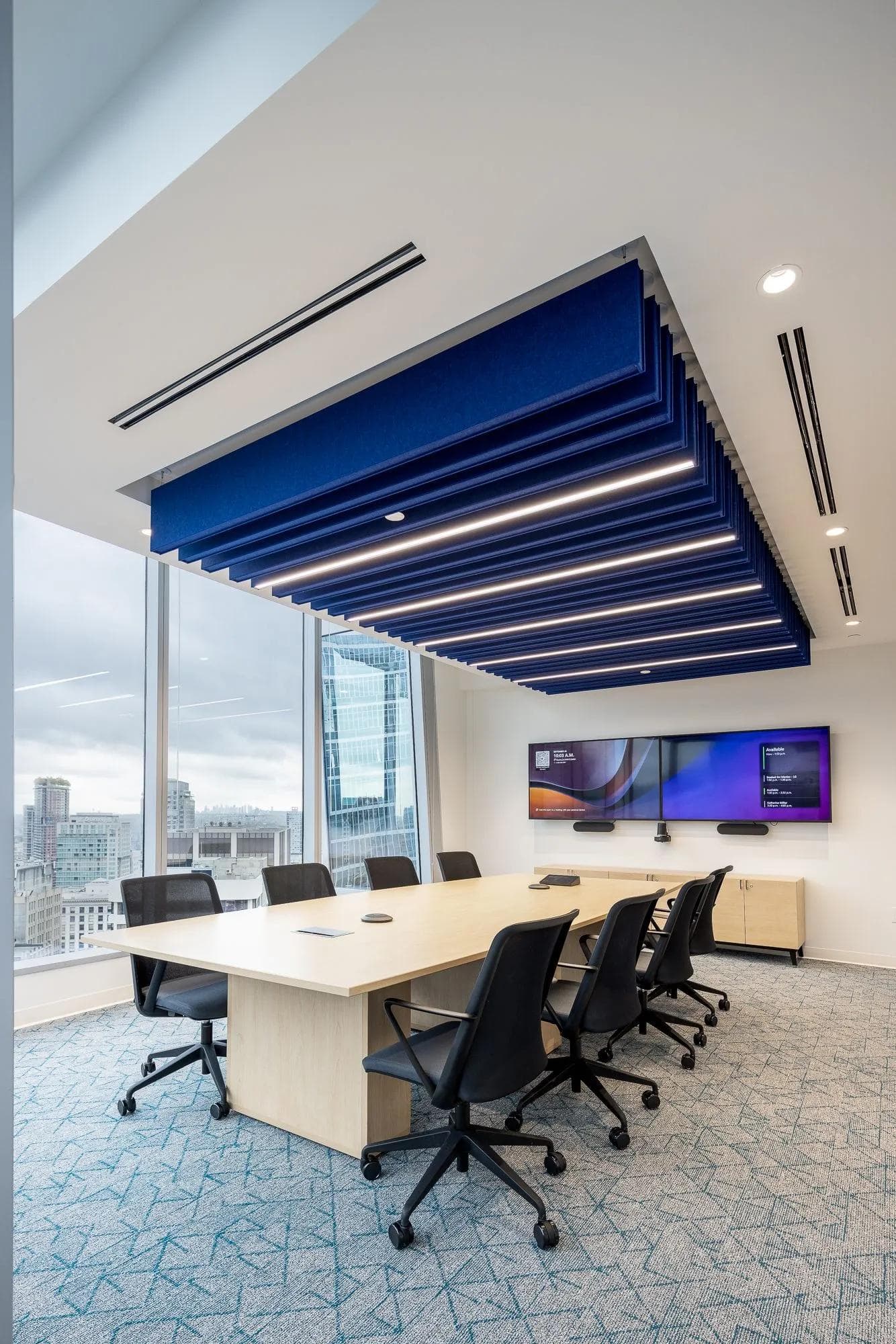
A tech-enabled meeting room integrates advanced hardware, intuitive software, and thoughtful furniture solutions to create a seamless experience for in-person and remote participants.
Why tech-enabled meeting rooms are critical in a hybrid office
A common challenge we see across organizations is that existing meeting rooms are not designed for hybrid work. When clients reassess their office environments, they often identify recurring issues: cameras that fail to capture everyone in the room, audio systems that compete with in-person dialogue versus virtual attendees, and troubleshooting delays and connectivity issues that disrupt meeting flow. These friction points can lead to reduced engagement and inconsistent meeting experiences.
By taking a tech-forward approach to meeting room design, companies can resolve these issues and create spaces that genuinely support hybrid collaboration. Thoughtfully designed, tech-enabled rooms foster better participation, clearer communication, and a more equitable experience for every attendee, regardless of where they’re joining from.
Unique ways to optimize your rooms for hybrid meetings
- Dual- or multi-screen setups: Place one screen for in-room content and another for remote participants’ video feeds. This keeps both audiences visible and engaged without constant switching.
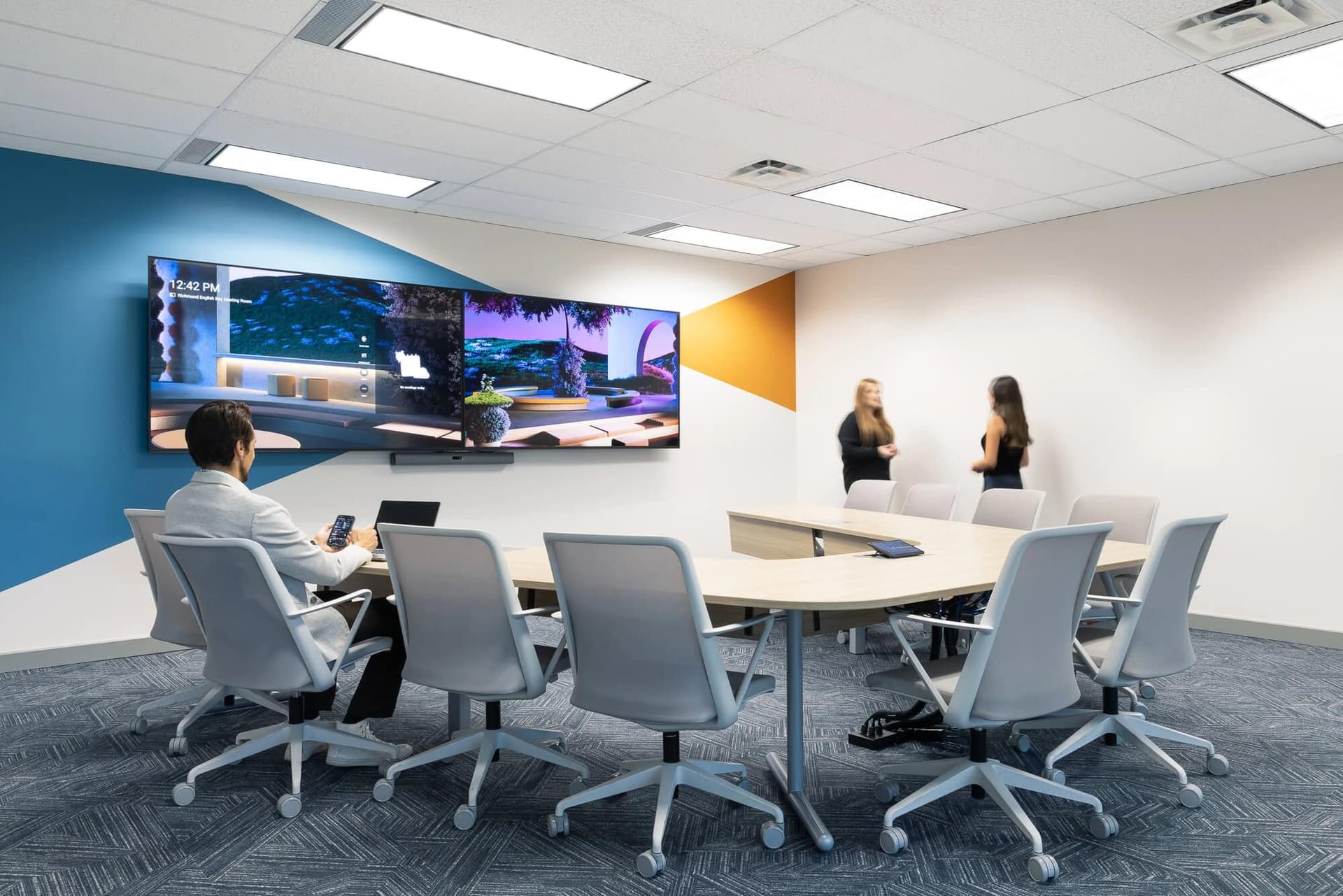
- Adjustable or modular camera arms: Flexible setups that allow teams to reposition cameras depending on room layout or meeting style.
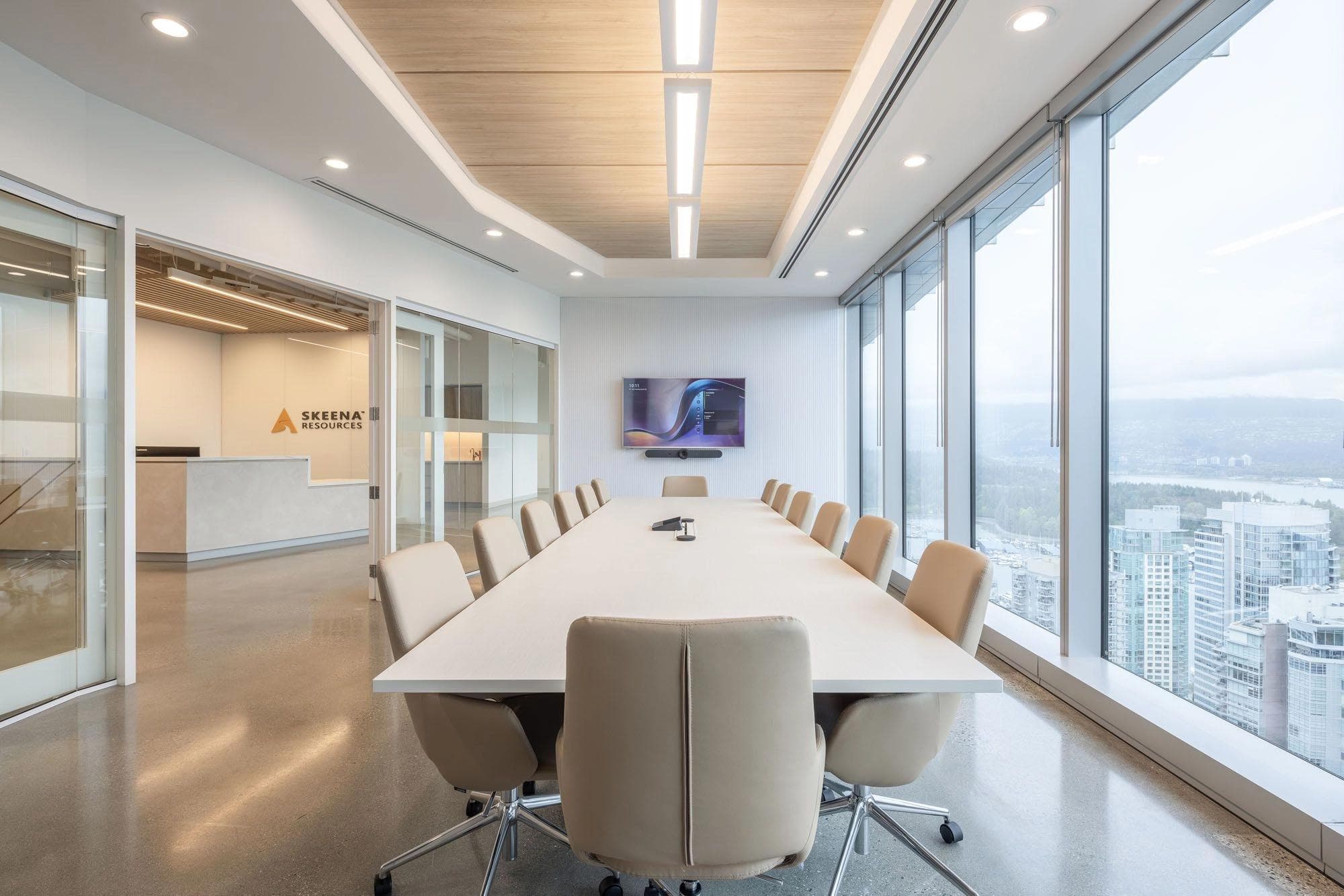
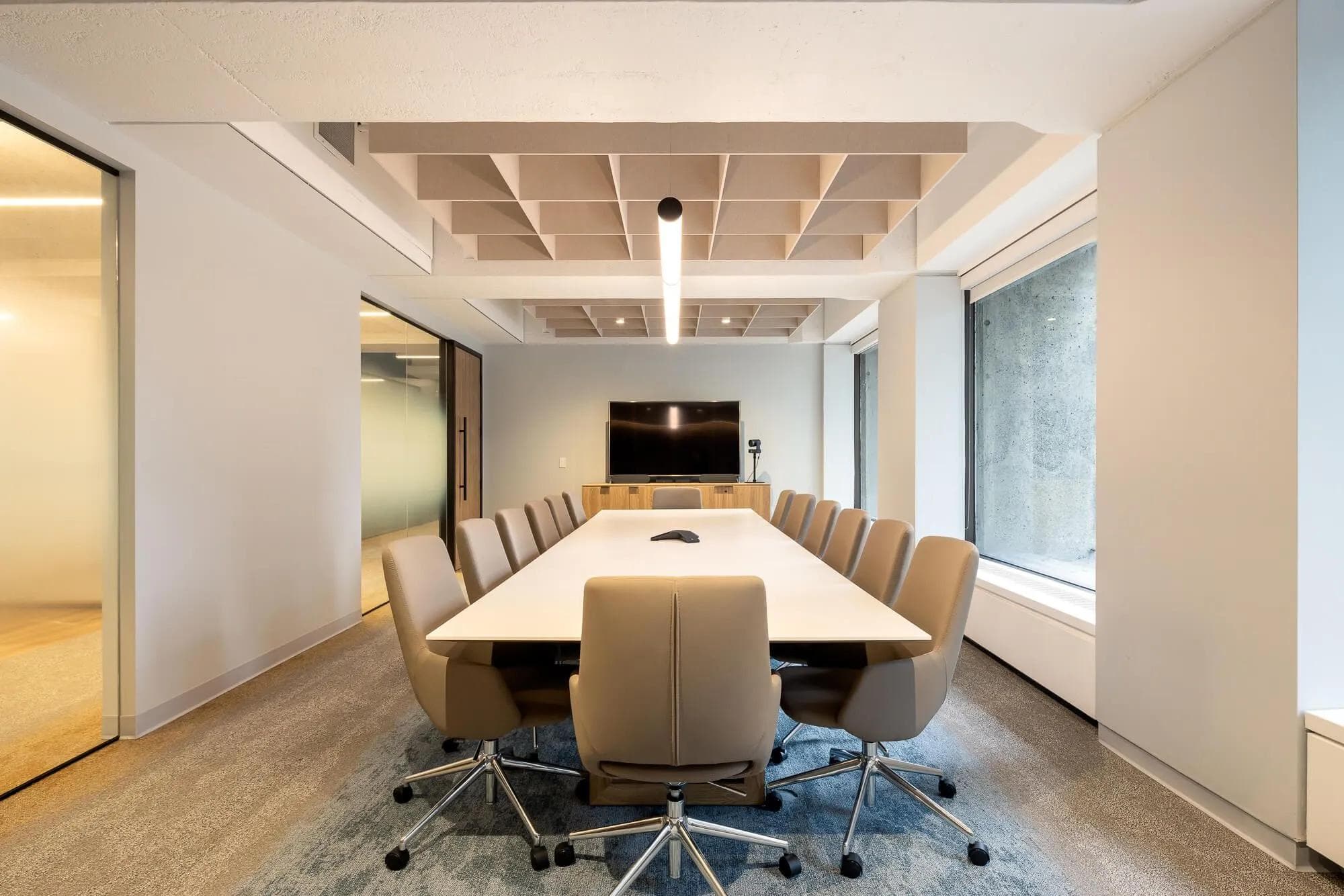
- Angled or tiered desks: Slightly angled surfaces help ensure that everyone is in the camera’s view and improve sightlines for large meetings.
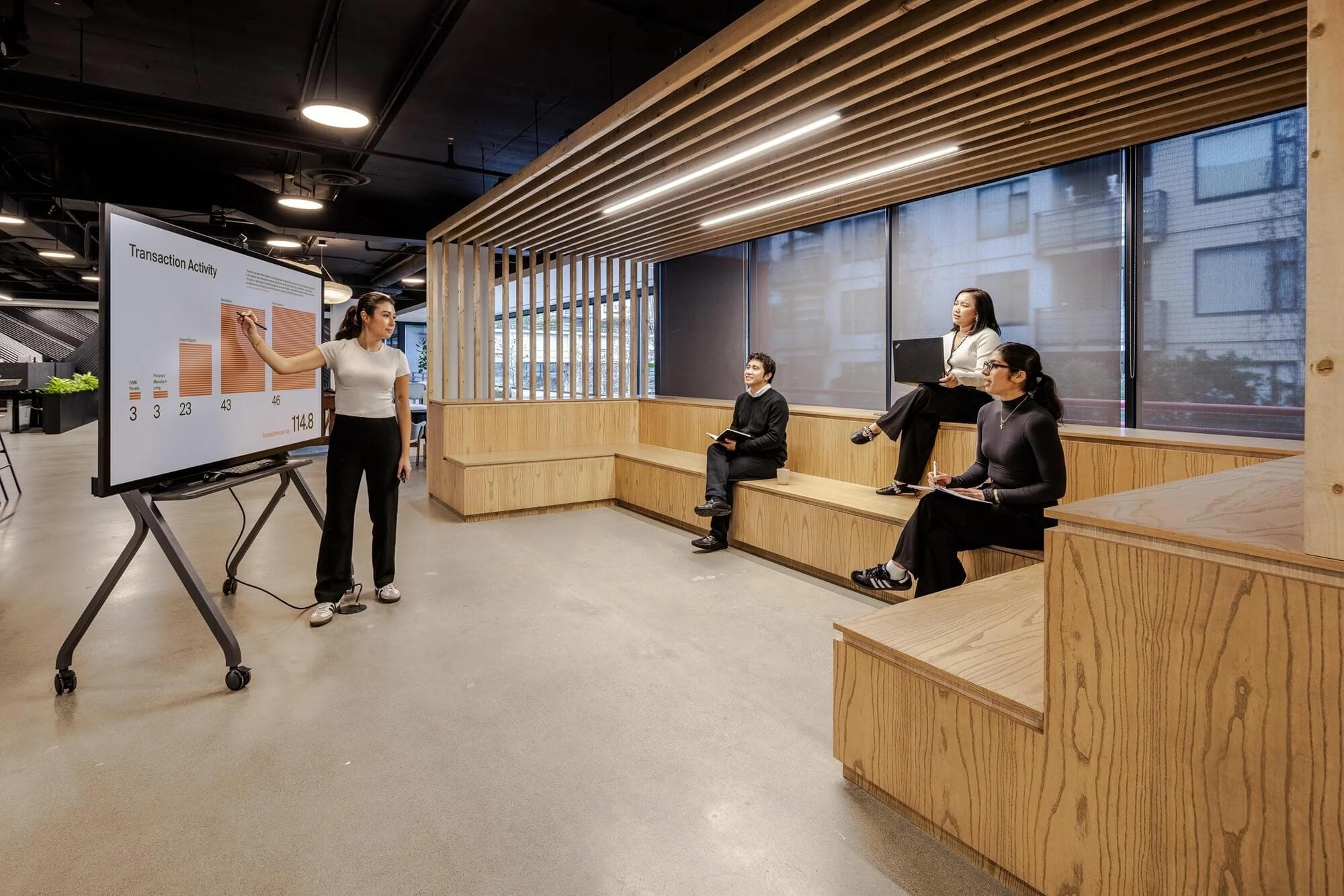
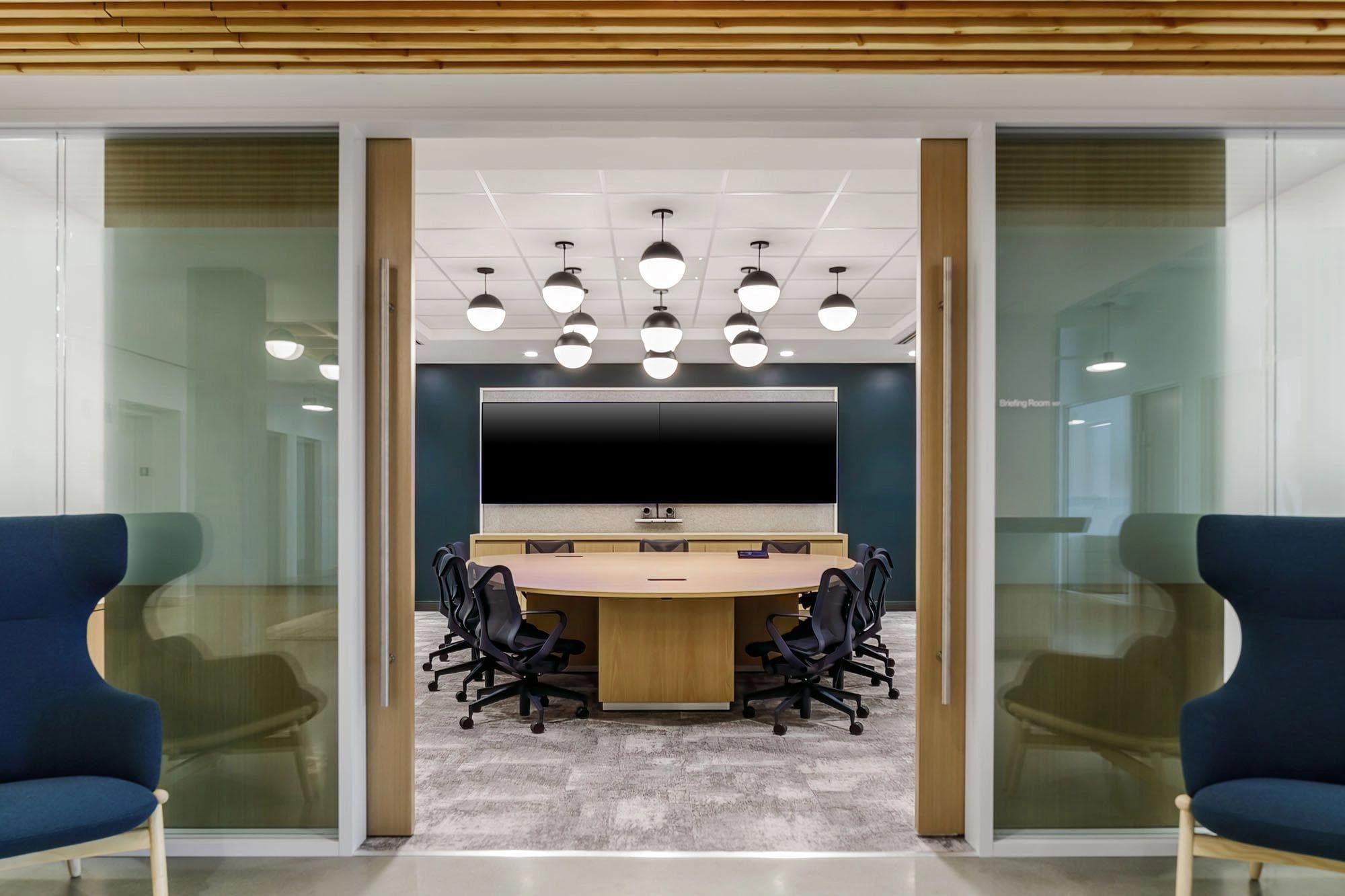
- Modular seating & movable surfaces: Lightweight, flexible furniture allows the room to be reconfigured for workshops, presentations, or smaller breakout sessions without losing technology accessibility.
- Acoustic-integrated panels: Screens or furniture with built-in acoustic treatments can reduce echo and improve audio quality without additional equipment.
Social hubs for hybrid workplaces
Social hubs are dedicated spaces in the workplace designed for informal interactions, providing employees with a comfortable place to connect, recharge, and build community outside traditional workstations.
Why social hubs matter in a hybrid office
In a hybrid workplace, social hubs play a crucial role in rebuilding the casual interactions that no longer happen naturally when teams are split between home and office. These spaces help foster belonging, strengthen culture, and make time in the office feel purposeful. By offering a comfortable setting for spontaneous conversations, relationship-building, and cross-team connection, social hubs create the human moments that hybrid work often lacks, ultimately enhancing engagement and making the office a place people want to be.
Fun ways to optimize your rooms for hybrid meetings
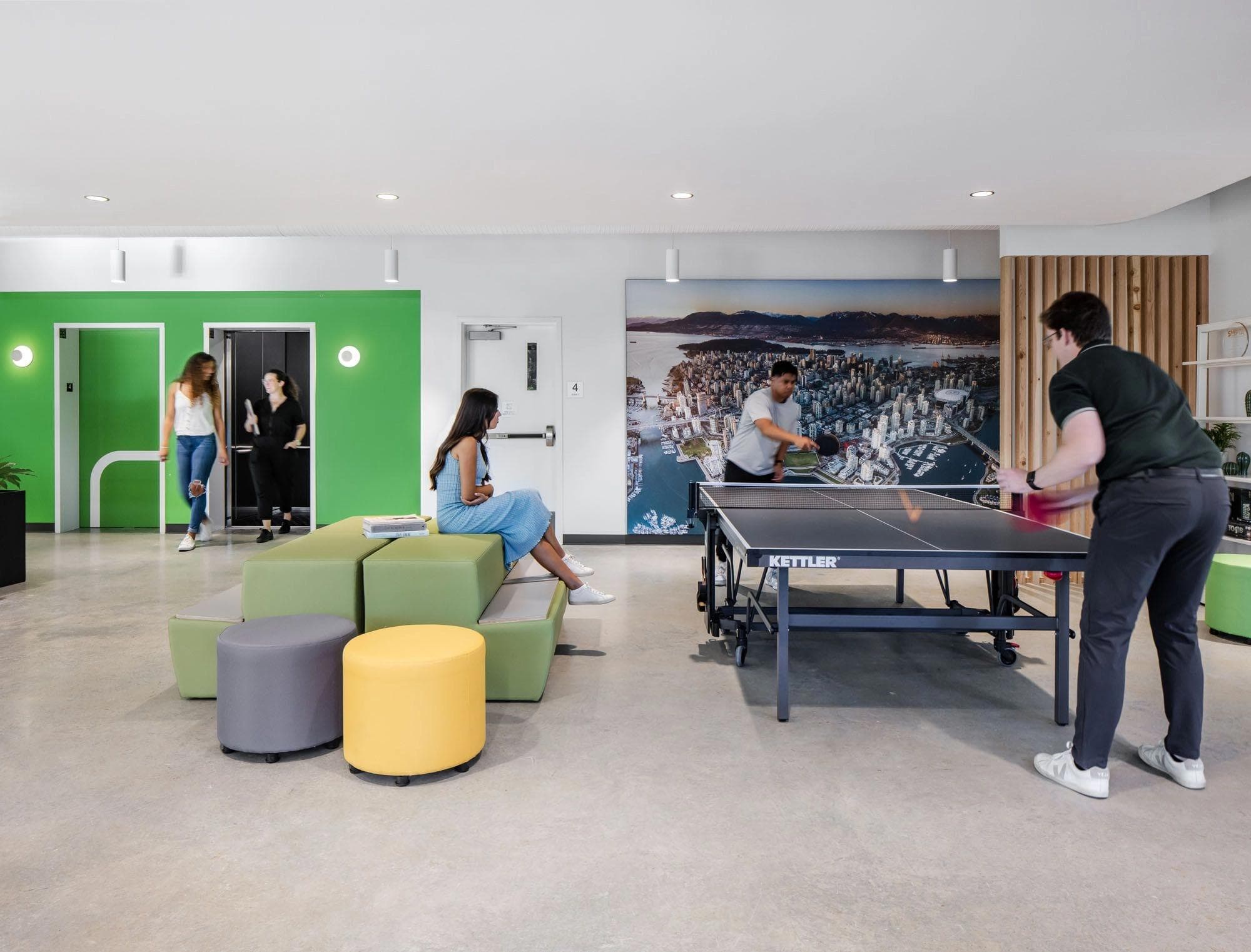
- Gaming Areas: Blending play with social interaction, gaming areas offer fun breaks that build relationships. From ping-pong and pool tables to board games.
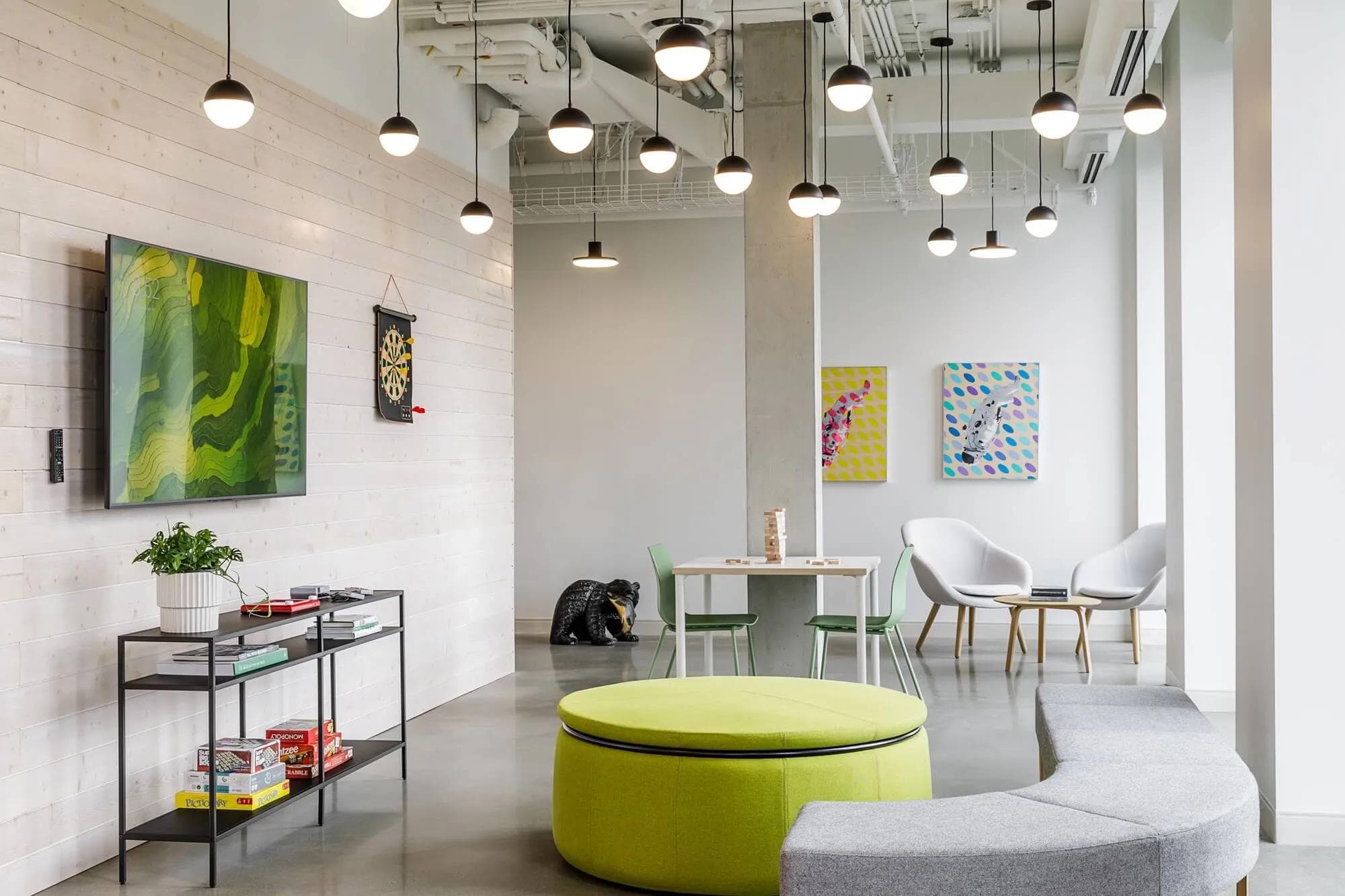
- Lounge Areas: Design lounges with soft seating, warm lighting, and flexible furniture arrangements. Layer in textures, biophilia, and residential-style finishes to create a welcoming, comfortable environment.
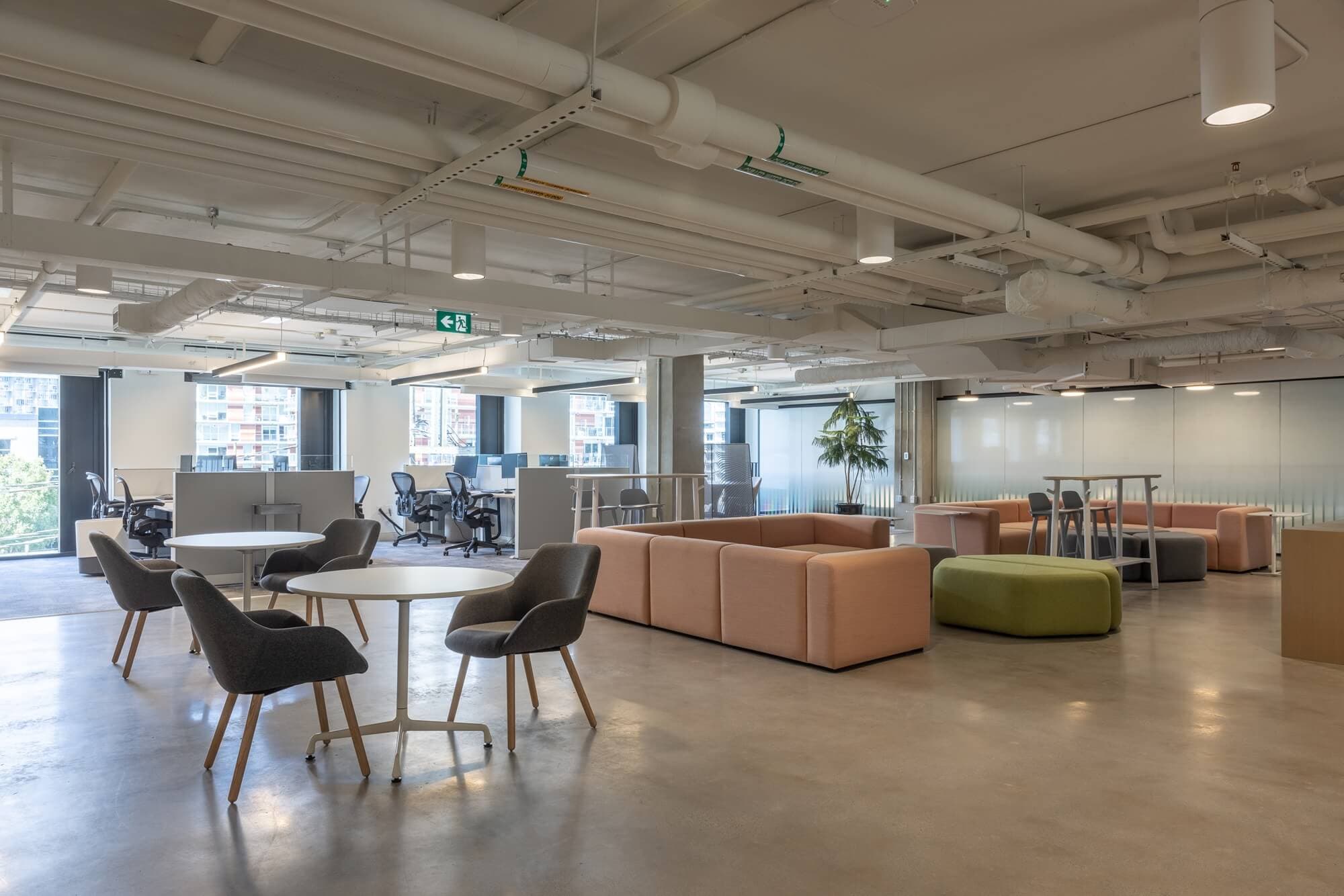

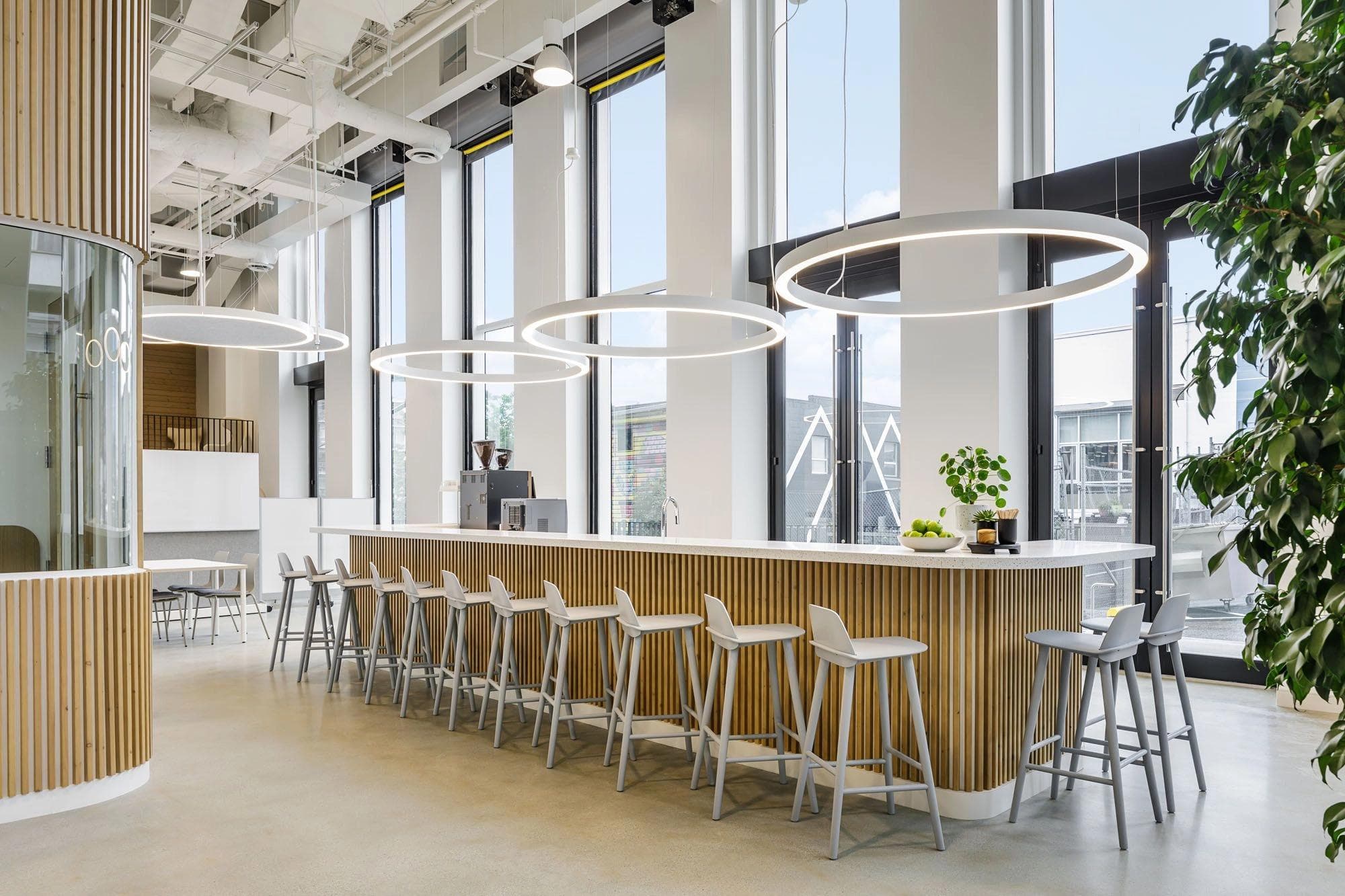
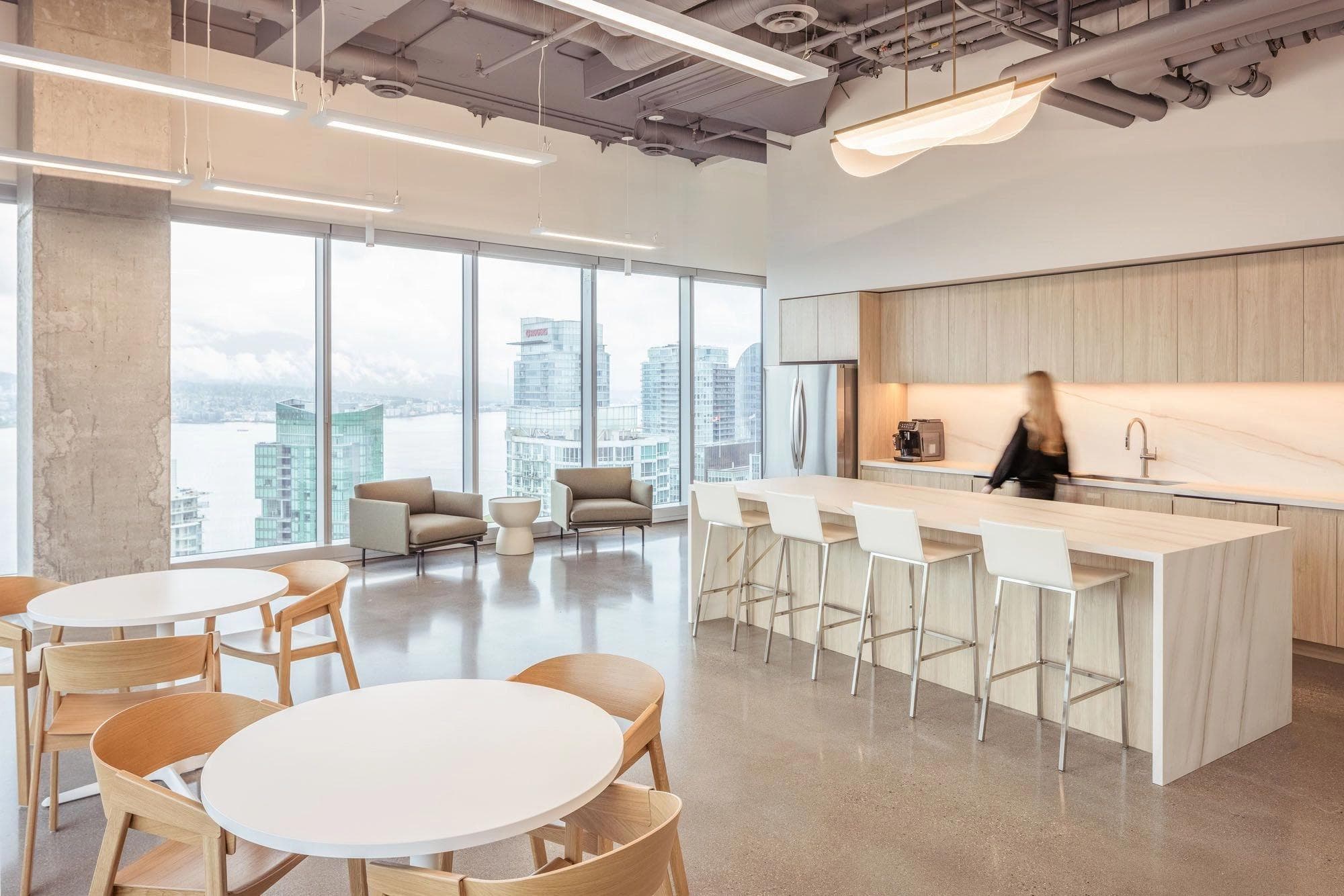
- Cafe-style kitchens: Kitchens designed to feel like modern cafés with bar seating and communal tables
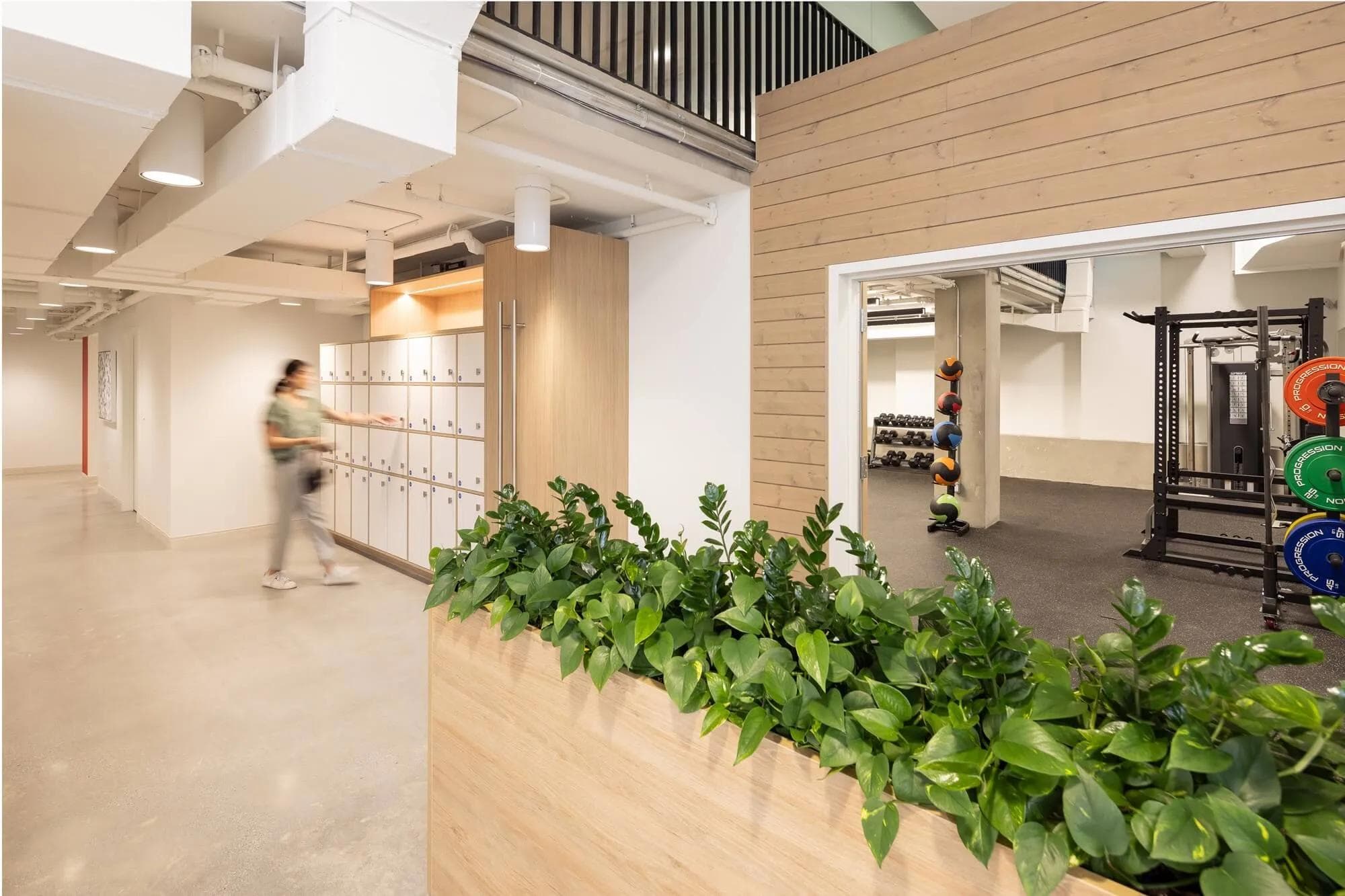
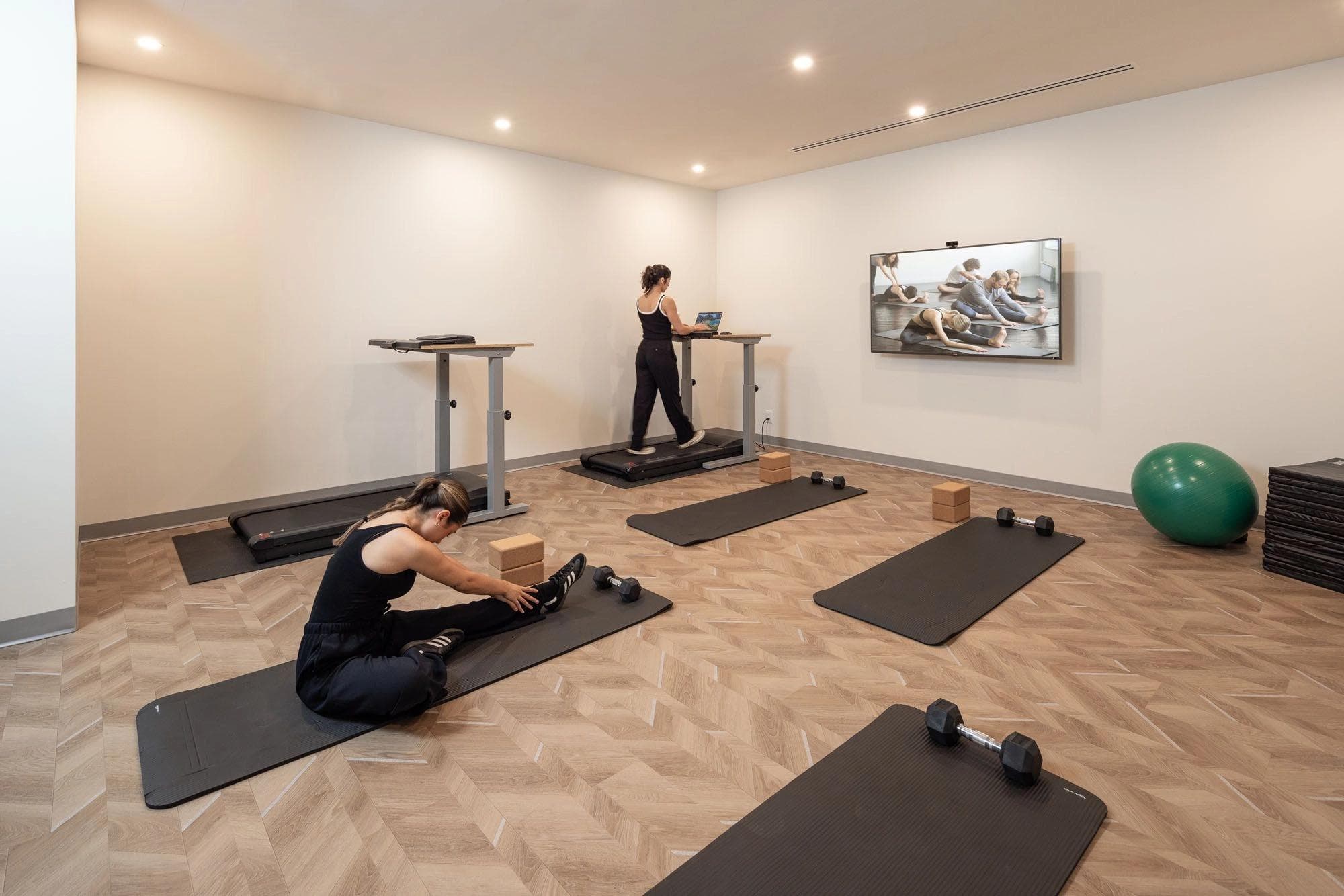
- Workout/Exercise spaces: Incorporating small workout zones or movement areas with a variety of equipment, from yoga mats to stationary bikes, supports employee well-being.
Touchdown stations in hybrid office layouts
Touchdown desks are unassigned, flexible workstations designed for short-term use or quick tasks rather than full-day, dedicated work. They are optimized for connectivity, easy to use, and comfortable, providing a convenient spot for employees to plug in, focus briefly, and move on. Because they aren’t assigned to any one person, they can support a wide range of activities and user needs throughout the day.
They’re also designed to cater to employees who are typically on the go and need a space to work for an hour or so, right before their next scheduled task elsewhere.
Why touchdown stations matter in a hybrid office
In a hybrid workplace, not everyone needs a dedicated workstation every day. Many employees come into the office only a few times a week, or even for just a few hours, to attend a meeting, collaborate, or complete a specific task. Touchdown desks offer a practical solution for these moments, giving people a place to work before or after scheduled activities without requiring permanent space. They also help organizations maximize real estate, ensuring the office stays efficient, flexible, and ready to support fluctuating occupancy.
Creative ways to integrate touchdown spaces
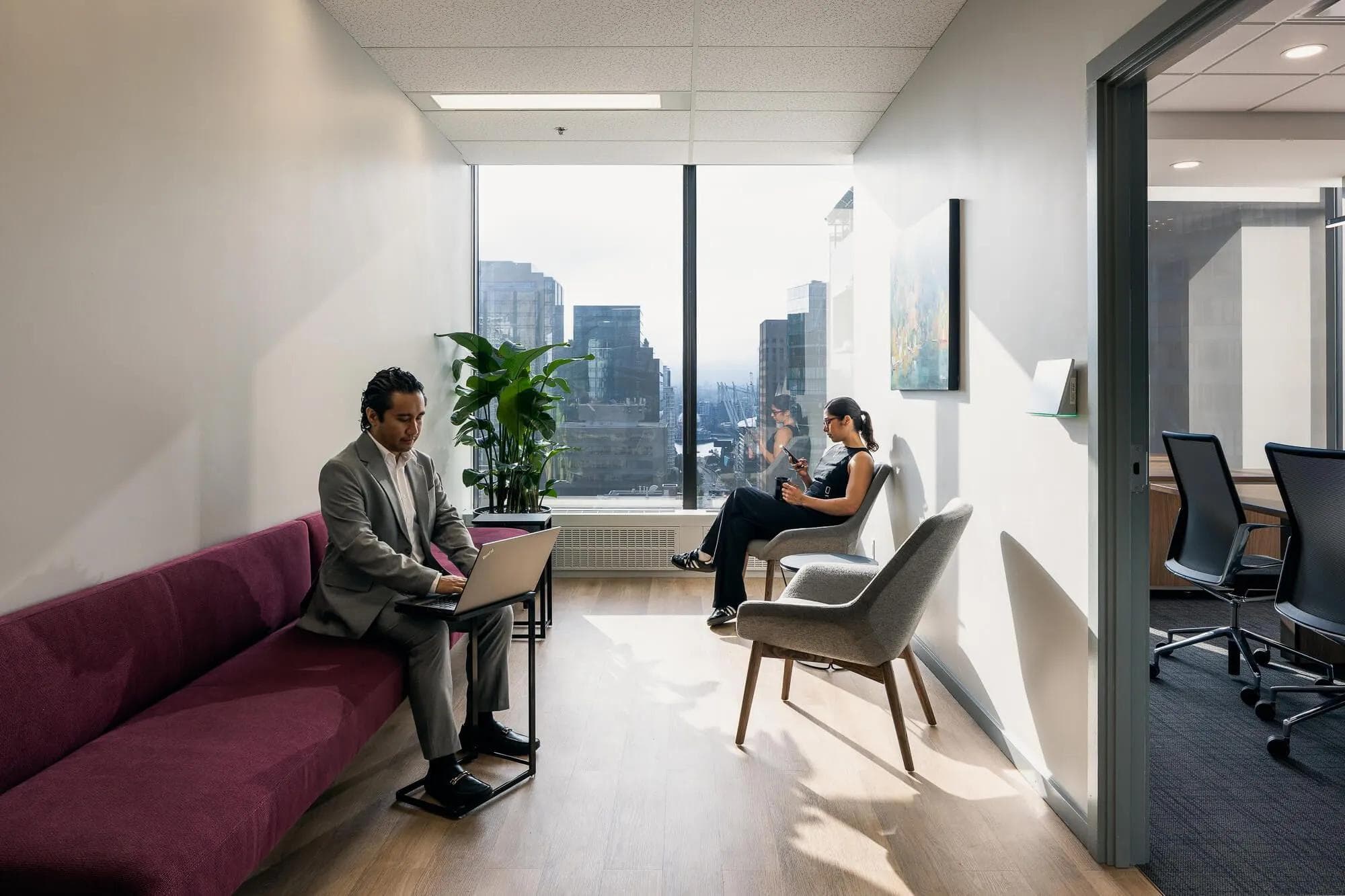
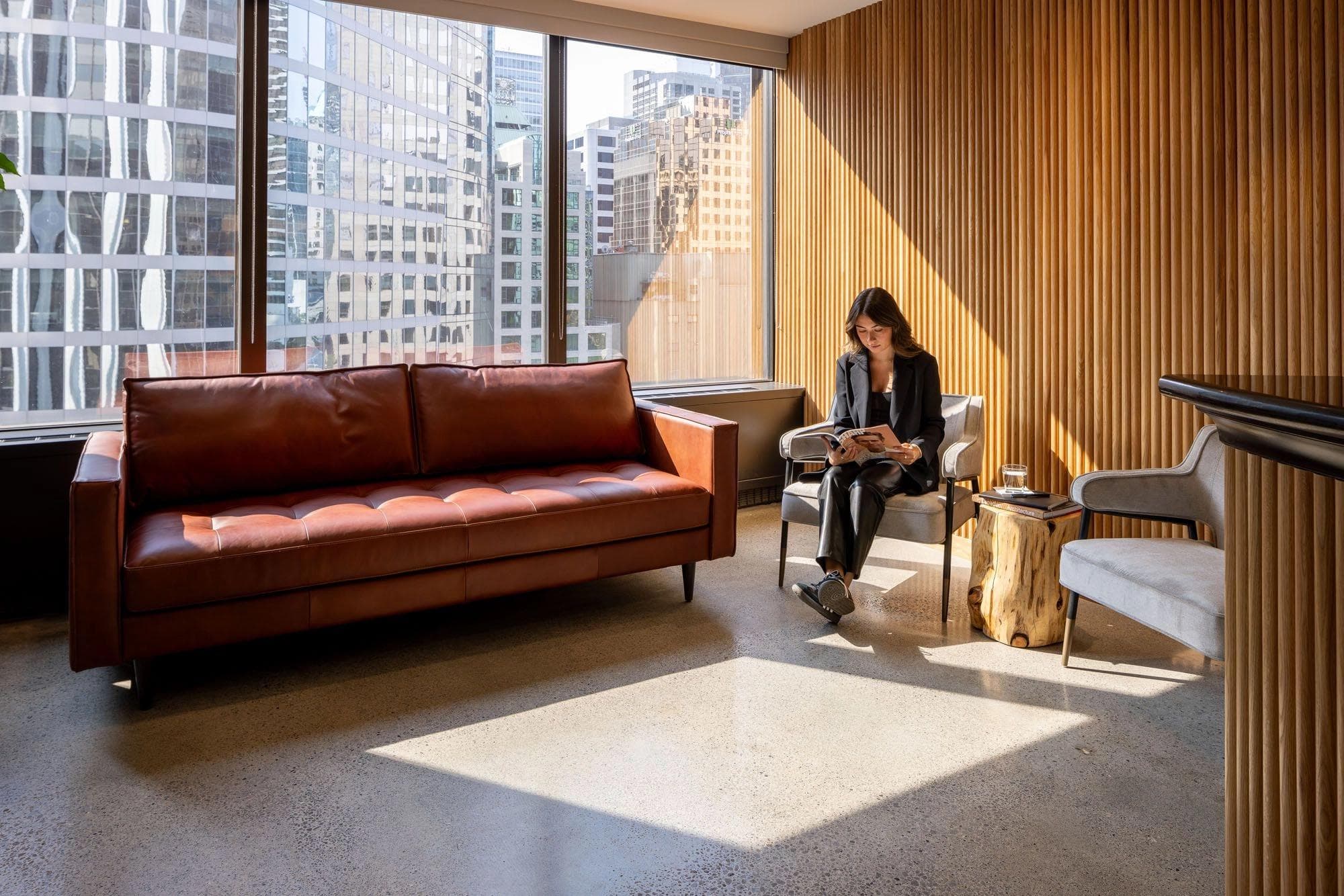
- Purposeful Waiting Areas: Transform reception or waiting zones into productive touchdown spots by adding small laptop tables, integrated power, and comfortable seating. These micro-work areas make use of underutilized space while supporting quick tasks.
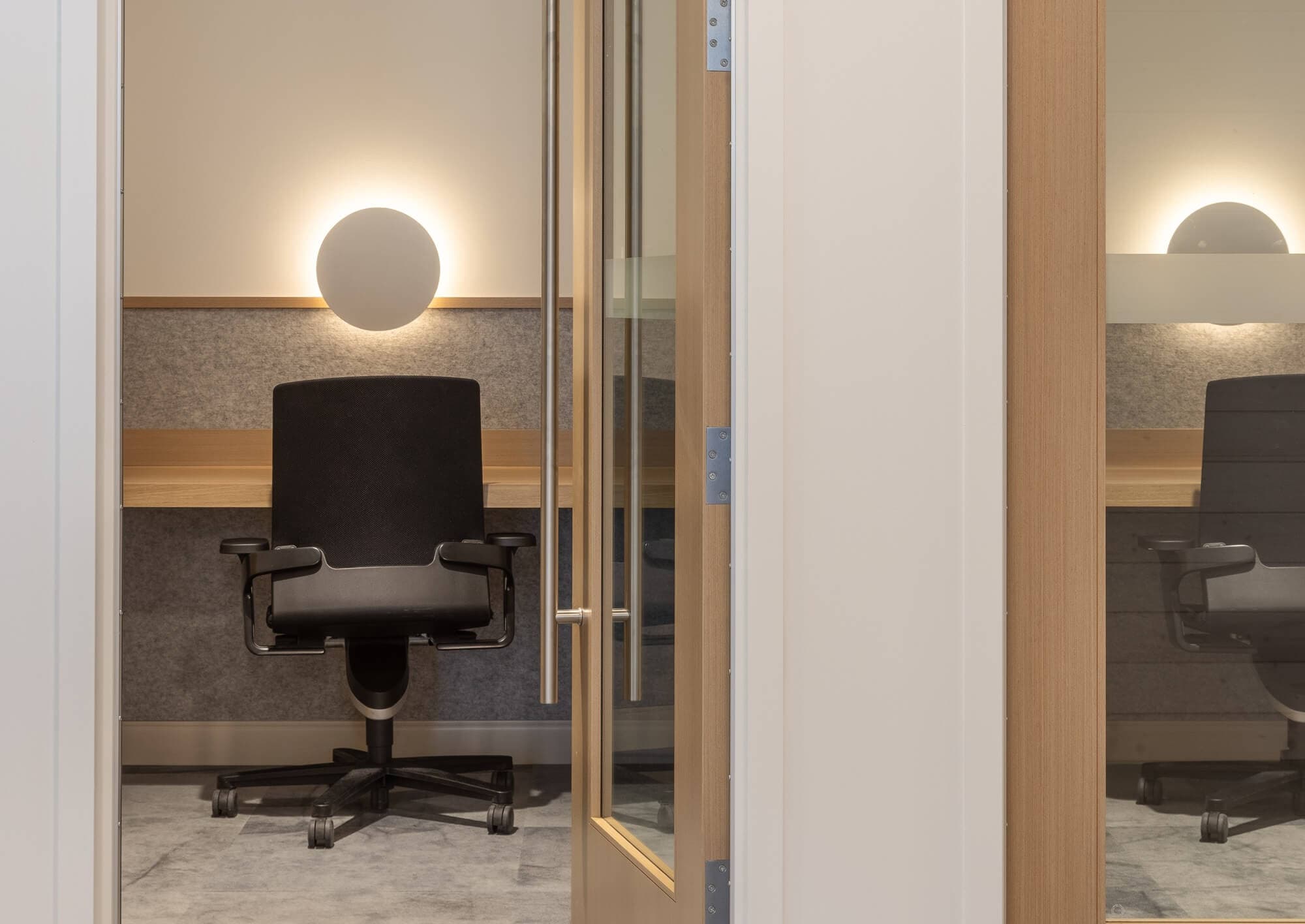
- Solo working workspace: Scatter individual high-focus tables in quieter corners or along windows. These minimalist, plug-in-ready stations offer a retreat for short bursts of concentrated work without requiring a formal workstation.
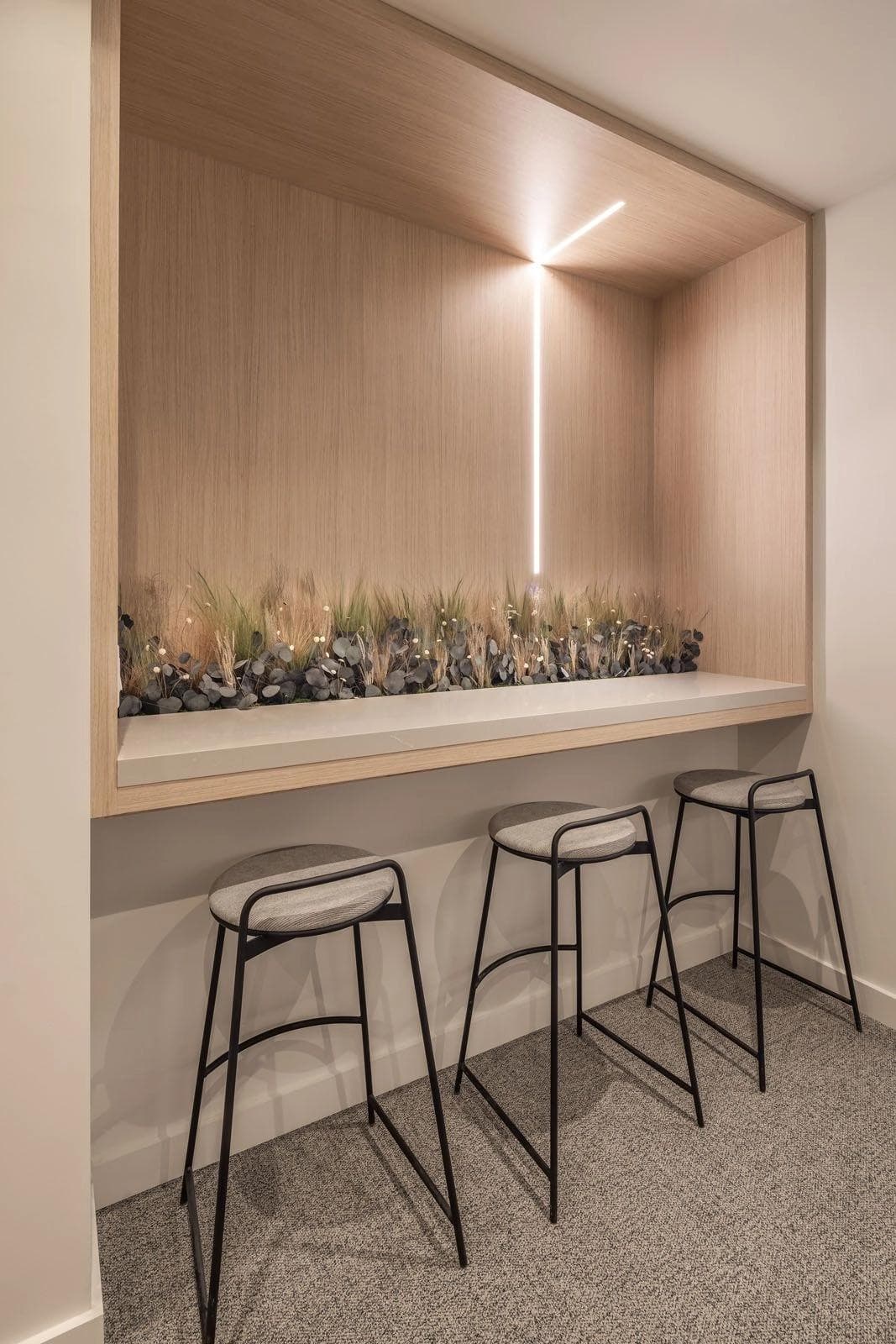
- Bar-Height Seating: Add bar seating along corridors, kitchen edges, or perimeter glazing. These spots encourage casual drop-ins, quick laptop use, or stand-and-work sessions, while also activating transitional areas.
Lockers and storage for hybrid teams
Provide a secure storage solution that gives employees a reliable place to keep their personal belongings in a shared, hybrid workplace.
Personal storage is often overlooked in hybrid workplaces. Yet, it becomes increasingly essential as workstations shift to shared use and employees no longer have a permanent desk to store their belongings. As people move between home, office, and meetings, they need a secure spot for personal items so they can work with ease and peace of mind. Modern locker solutions go beyond storage; they can serve as informal gathering points, strengthen team identity, and act as space dividers within open floor plans. In this way, lockers support both the practical and spatial needs of a flexible, hybrid environment.
Ways to integrate lockers and storage spaces
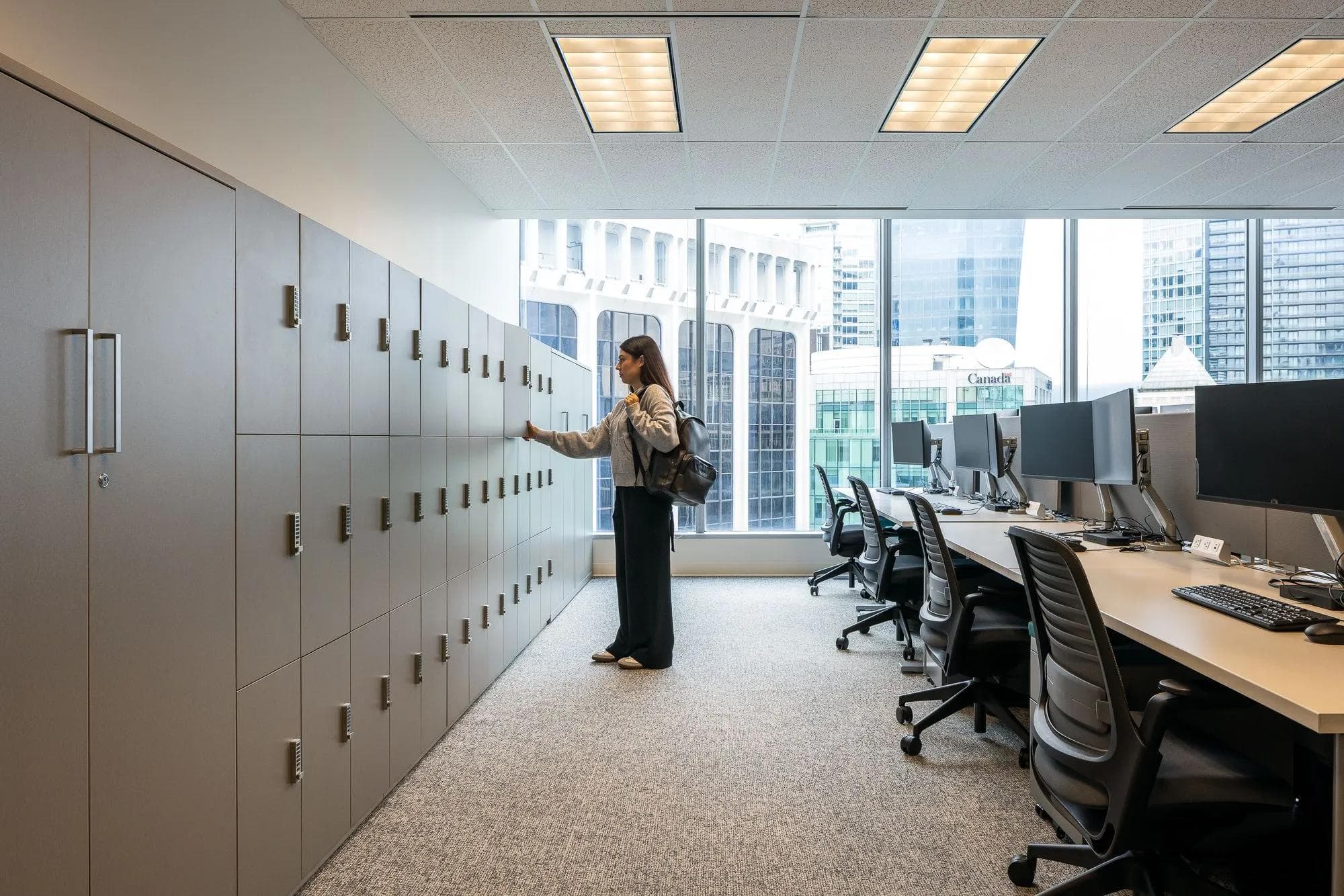
- Along corridors: One of the most common approaches is placing lockers along corridors. Centralized locker locations allow staff to conveniently drop off and pick up belongings at the start and end of the day. In multi-floor workplaces, colour-coding lockers by floor can add a helpful layer of wayfinding, making navigation easier and more intuitive for employees.
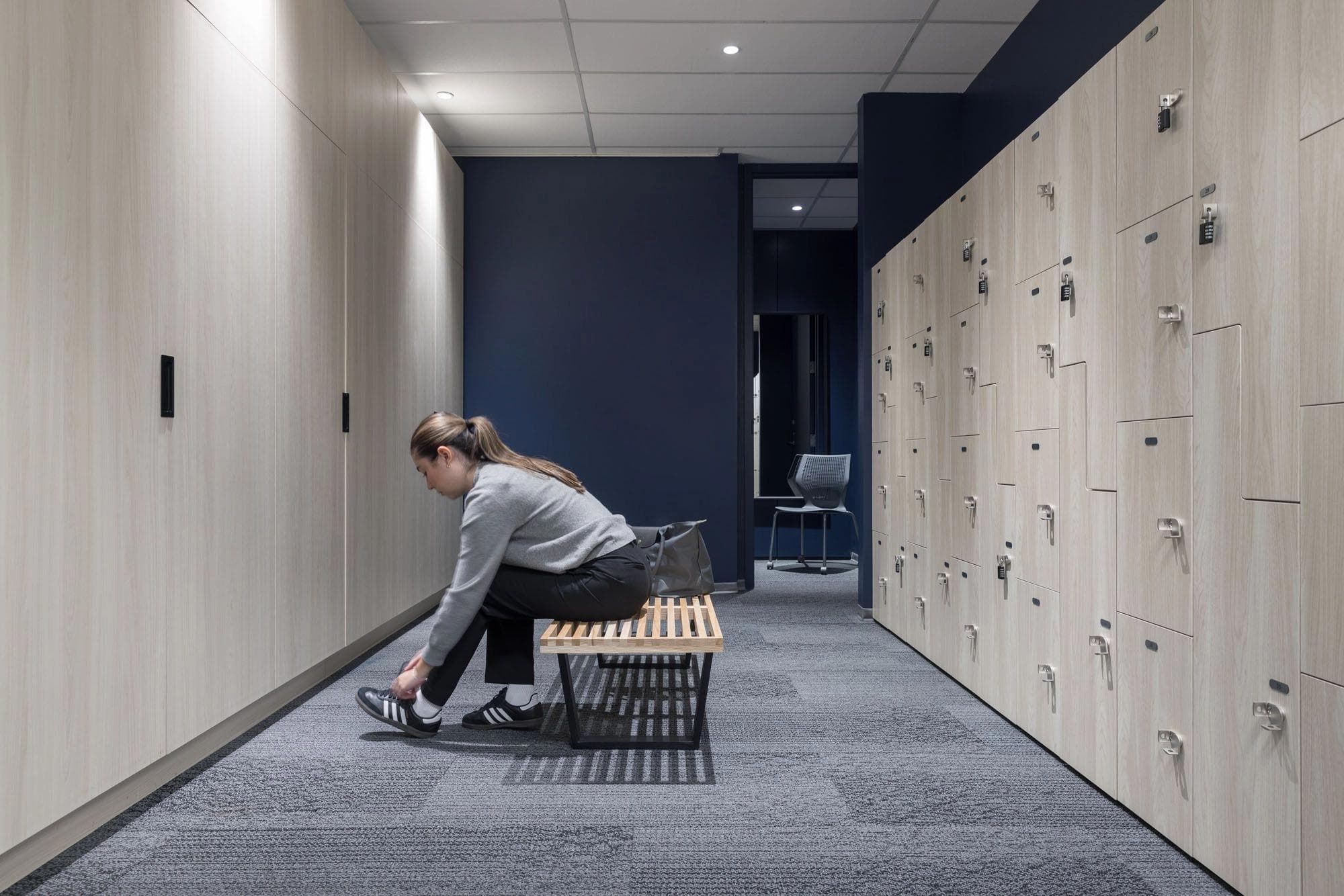
- Zone Dividers: Locker units can be used as functional partitions in open-concept workplaces, providing both storage and visual separation. In addition to defining distinct areas, they can help reduce noise and create a greater sense of privacy within shared spaces.
How Aura Can Help
Investing in your workplace is ultimately an investment in your people and your business. Many organizations continue to struggle with the realities of hybrid work, not because teams lack talent or commitment, but because the physical environment isn’t equipped to support new ways of working. By thoughtfully redesigning the workplace, organizations can create spaces that empower employees, strengthen culture, and enable hybrid work to function as intended. Aura’s expertise in workplace strategy, design, and build helps companies navigate this transition with clarity and confidence, ensuring their work environments not only meet today’s needs but also evolve with tomorrow’s demands.
Transform your hybrid office with intentional design
Book a consultation to explore solutions that support your people and your business. Our team of experts can help integrate these spaces and more into a cohesive, future ready workplace.