Why a Successful Office Transformation Starts with HR Leaders
Explore how HR leaders are shaping the modern workplace by leveraging employee insights to transform offices into spaces that inspire, support well-being, and foster connection in a hybrid work world.
The office hasn't disappeared, but its role has shifted. Once viewed primarily as a place to get work done, the office is now expected to deliver much more. For HR leaders, this evolution has redefined how the workplace intersects with the broader employee experience.
How the role of the office is being redefined
With hybrid and flexible work arrangements more clearly established, the office must now play a very different role than it once did. Workplaces must serve as a destination that brings people together and supports meaningful in-person interactions. Yet, many employees are still working in offices designed 10 or 20 years ago, spaces that haven't kept pace with how people are currently working.
Employees now have greater flexibility to work from home or in third spaces. To ensure employees choose the office when it matters most, the workplace must deliver clear advantages over other options.
This shift has raised the bar, pushing the office to deliver more than just a physical space. It must now be a place that inspires, connects, and supports people in ways that make the commute worth it.
Designing Workplaces That Meet Employee Expectations
A recent study by Unispace found that a large majority of employees are dissatisfied with their current office environment. Of the 3,000 office workers surveyed across Europe, 95% said their workplace needs improvements to create a more desirable setting for themselves and their colleagues.
Carrie Sikman, Aura's Director of People and Culture, has seen this pattern throughout her career. She notes that office space consistently ranks as one of the most common sources of frustration for employees. The connection is clear: when workplaces fall short, employee satisfaction suffers, and without happy employees, it's nearly impossible to sustain a productive workforce.
Employees are becoming more vocal about what they need. At home, they've grown accustomed to personalized setups, tailored to how they work best. When coming into the office, employees expect the same level of comfort and functionality, and more. That means access to a variety of spaces that support different ways of working, from quiet focus areas to collaborative meeting rooms. If the physical environment can't deliver, HR leaders are often left to fill the gap through programming, perks, and initiatives that make the office a more desirable place to be.
This shift has placed HR professionals at the center of office transformations. As employees' strongest advocates, they bring critical insights into what people truly need and want from their work environment. Their perspective ensures that these needs are not overlooked in conversations with CEOs, COOs, CFOs, and other leaders who shape workplace strategy.
Critical Workspaces that Boost Employee Engagement
As HR plays a greater role in shaping the workplace, the conversation is shifting from simply filling seats to creating spaces that truly matter to people. By prioritizing the right mix of spaces, organizations can create workplaces that not only improve day-to-day satisfaction but also unlock higher levels of engagement, retention, and performance.
From our research and experience, the following areas have the most significant impact when reimagining an office environment:
Lunchroom
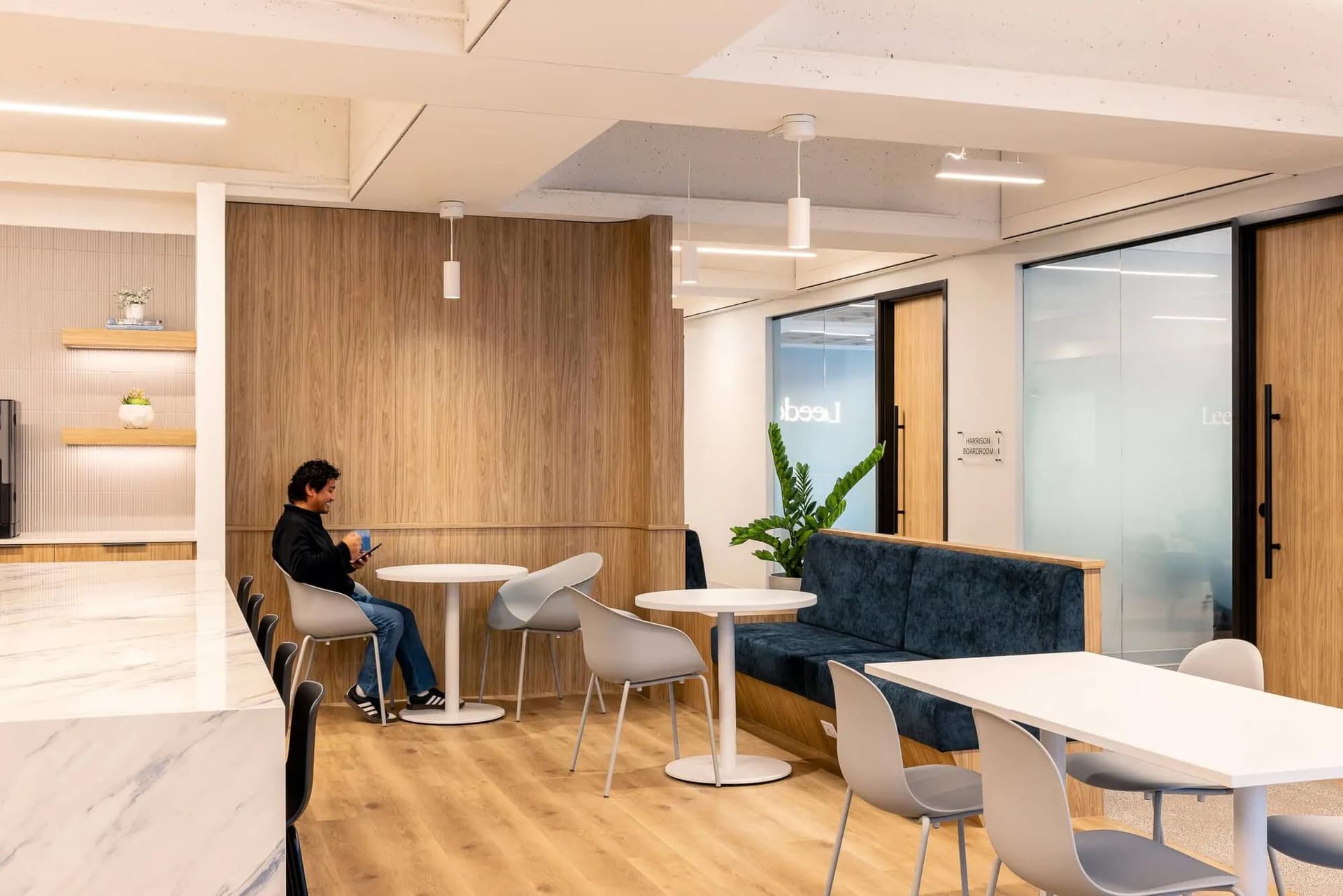
A lunchroom area is the cornerstone of connection. Shared meals have always been a unifying force, and in the workplace, a communal dining area allows employees to step away from their desks, build relationships, and spark informal conversations. According to professors at Cornell University, groups who regularly eat together are more engaged and perform better than those who don't.
Well-equipped boardroom
The boardroom is more than a space for formal meetings; it can play a central role in supporting team meetings, presentations, brainstorming sessions, and events. When integrated thoughtfully with reliable AV, intuitive tools, and seamless connectivity, meetings run smoothly and efficiently. In a hybrid world, the ability to engage both in-room and remote participants equally is essential to ensuring everyone feels included and heard.
Wellness rooms
Dedicated spaces for meditation, quiet breaks, or even a short yoga session play an essential role in supporting both mental and physical well-being. Thoughtful workplace design has the power to elevate employee health and satisfaction. By integrating wellness-focused areas into the office, organizations allow employees to recharge, improving their state of mind and, in turn, enhancing overall performance.
Variety in workspace typologies
Providing spaces that resonate with employees' preferences allows them to choose the environment that best suits their tasks and work style. Employee surveys provide valuable insights into workspace preferences, and engaging staff in these conversations helps create a workplace tailored to their needs. When employees feel their environment supports them, they are more likely to choose the office as their preferred place to work.
How HR Data and Employee Feedback Shape Better Workplaces
For HR leaders, employee feedback provides a clear map for workplace design decisions. Surveys, engagement scores, and career development conversations all reveal what employees value most in their day-to-day experience. This data helps organizations identify gaps and align design strategies with real needs.
"Listening to employees is key," says Sikman. "When we look at survey results or engagement feedback, we can see where people feel supported and where the environment isn't meeting their expectations. That informs how we move forward."
By grounding design choices in data, HR ensures the office reflects employee priorities while also driving organizational performance.
Sometimes the answer is, "We can't do that right now, and here's why.' That transparency during office transformations matters.
Proving ROI: Making the Business Case for Workplace Design
A challenge that can arise from HR leaders' involvement in office transformations is balancing the financial responsibilities of the business with the desire to create an exceptional employee experience. Workplace improvements require an investment (whether small or large), and making the case to leadership demands clear evidence of return.
Research acknowledges that workplace design grounded in data and driven by purpose delivers measurable returns across the organization. These benefits can include increased engagement, a stronger organizational culture, enhanced collaboration, and improved talent attraction and retention. When employees feel supported by their environment, they are more energized, creative, and motivated in their work.
Managers think in terms of productivity and costs, but HR thinks holistically about the employee experience," Sikman explains. Happy employees are hardworking employees, and that translates directly into business success. If HR isn't part of the conversation in a renovation, you're missing the wisdom in the room."
Why HR Leaders Should Guide Workplace Transformations
When it comes to workplace transformations, HR has a critical role to play, and in many cases, should be leading the conversation. Decisions about how an office is designed are ultimately decisions about people: how they collaborate, focus, recharge, and connect with the organization's culture.
HR leaders are uniquely positioned to bring forward data on employee engagement, turnover, and career development, translating these insights into design priorities that directly impact talent attraction and retention. Without HR at the table, workplace projects risk becoming purely aesthetic or cost-driven, overlooking the deeper connection between space and employee experience.
By placing the employee experience at the center of workplace renovations, organizations can ensure that investments not only look good on paper but also drive long-term value through happier, more engaged, and more productive teams.