TenantTalks: Evidence Behind Experiences that bring People Back Panel Discussion Recap
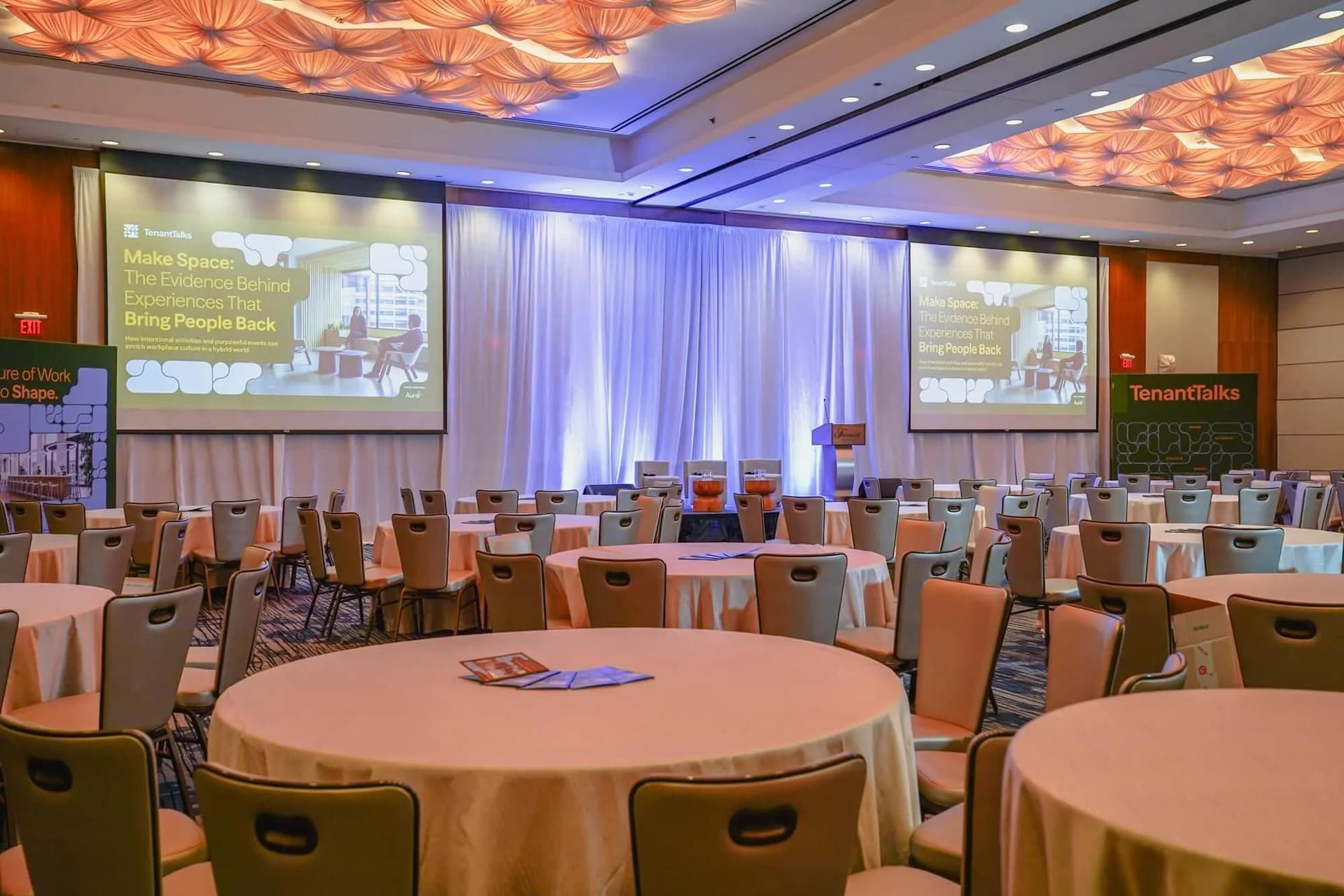
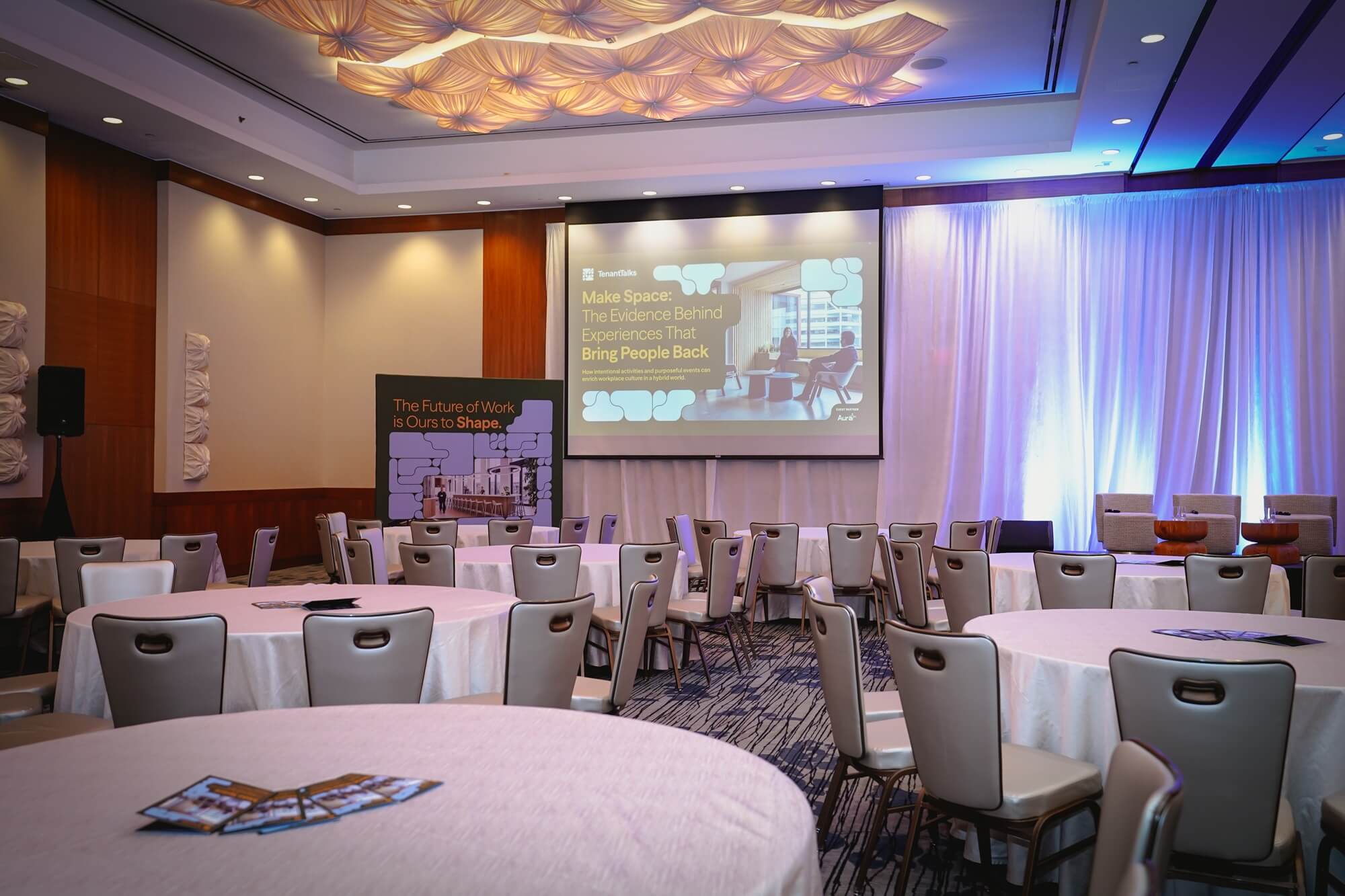
On October 30, 2025, leaders from across Western Canada’s workplace, design, and business communities gathered at the Fairmont Pacific Rim for TenantTalks: Make Space – The Evidence Behind Experiences That Bring People Back.
This engaging morning event explored how intentional activities and purposeful events can enrich workplace culture in a hybrid world, sparking thoughtful conversations around connection, collaboration, and belonging. As organizations continue to reimagine how people come together, this edition of TenantTalks examined how curated programming, such as social gatherings, learning sessions, and team-building initiatives, can transform the workplace into a vibrant hub that supports engagement, morale, and organizational values.
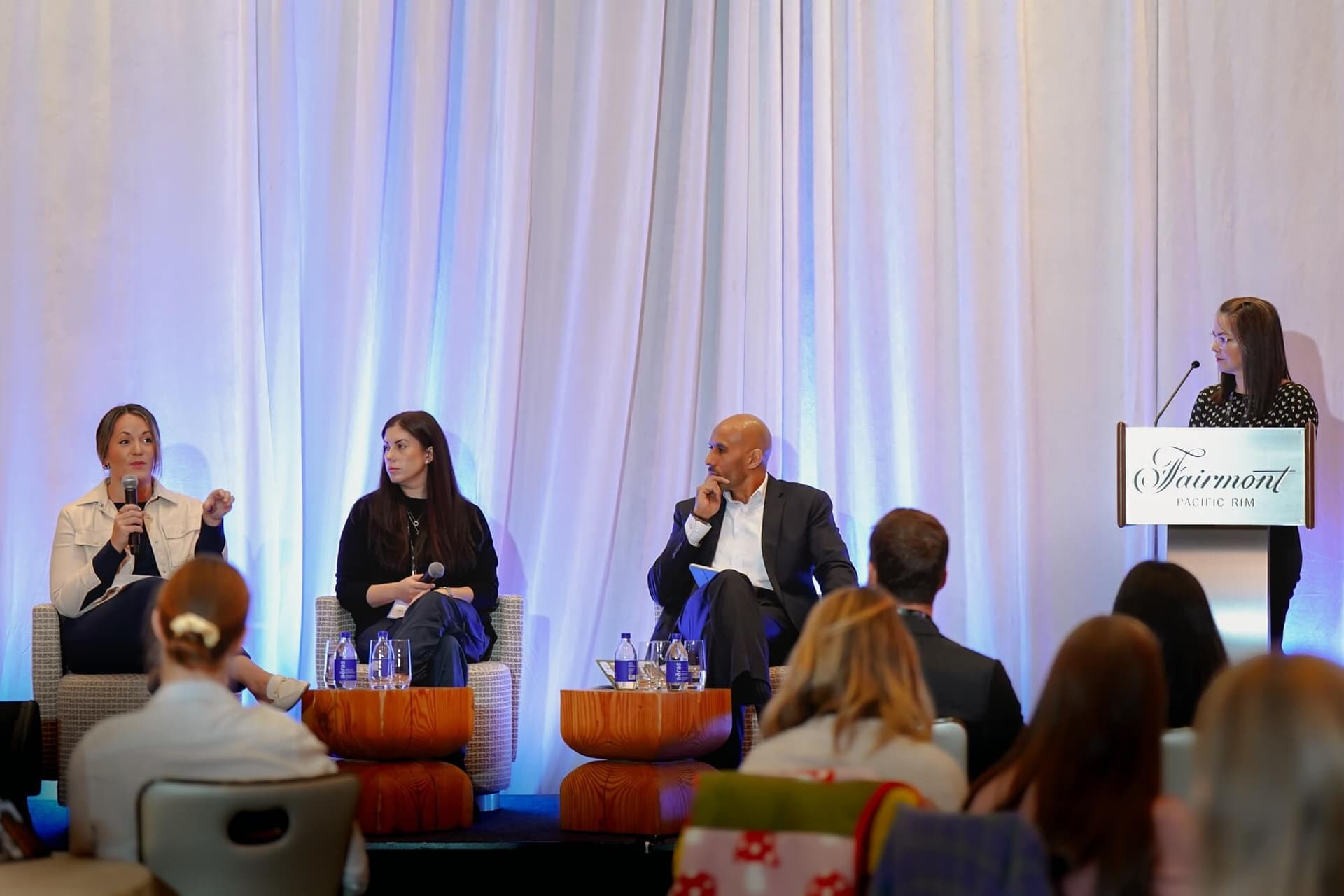
The panel discussion featured insights from seasoned professionals who are shaping employee experiences through strategic programming and innovative workplace design.
Panelists:
- Brittany Reardon – Director of Employee Experience, Clio
- Krista Lauridsen – Vice President, Head of Real Estate, Facilities, Design, and Construction, ATB Financial
- Adel Gamar – CEO & Cofounder, Gamar Leadership Group.; Adjunct Professor, UBC Sauder School of Business
This article recaps the key insights and takeaways from the panel discussion, offering actionable strategies for creating meaningful, people-centred workplace experiences. For additional perspectives, readers can also review our fireside chat recap or watch the video recordings of the event.
Question 1: What were you seeing before the pandemic in terms of programming or gatherings that brought people and teams together, and how did that evolve through remote work and into what you’re doing today?
Before the pandemic, panellists described workplace gatherings and programming as largely unstructured and informal. Brittany Reardon, from Clio, referred to it as a “cruise” with constant events where attendance was natural, “if we build it, they will come.” Krista Lauridsen from ATB Financial echoed this, noting that interactions were often incidental, like bumping into colleagues at the water cooler or attending holiday parties, with little intentional design behind them.
The onset of remote work during the pandemic forced organizations to become more deliberate, experimenting with virtual activities, mentorship platforms, and engagement tools to maintain connections and foster a sense of belonging. Brittany highlighted programs like Luna Park and Trova that helped foster meaningful interactions, both social and professional. Adel Gamar from GLG reflected on the abrupt shift to working from home as a “punched in the face” moment, noting that while challenging, it also revealed opportunities to rethink work and embrace hybrid models.
Across the panel, there was a clear evolution from spontaneous engagement toward purposeful, intentional programming designed to support both connection and employee experience in today’s hybrid workplace.
Question 2: How do you sustain connection and engagement beyond key moments or events, especially for employees who are not frequently co-located, to ensure they remain included in the broader experience?
Panellists emphasized that sustaining connection and engagement in hybrid and distributed workplaces requires intentionality, clear purpose, and thoughtfully designed rituals.
Krista Lauridsen highlighted the shift from presenteeism to results-oriented work, built on trust, combined with digital rituals, regular one-on-one check-ins, and structured team gatherings, to create parity for both remote and co-located employees. Brittany Reardon reinforced that connection extends beyond formal events, noting the importance of small, meaningful moments and co-located gatherings to build social capital, empathy, and networked relationships across teams.
Both panellists emphasized the importance of designing purposeful experiences, such as “event in a box” kits by Clio, which empower leaders to create their own team gatherings, balancing flexibility with intentional in-person meetups. Lauridsen also underscored the broader organizational impact of connection, linking it to innovation, creativity, learning by osmosis, and ultimately business performance.
Across the panel, the consensus was that sustaining engagement in distributed environments relies on combining cultural clarity, hybrid rituals, and tools that enable inclusion, while being deliberate about why and how people come together.
Question 3: How do you coach leaders on practices that help build trust and belonging across distributed or hybrid teams?
Panellists explored the complex relationship between leadership, trust, and belonging in hybrid workplaces, emphasizing that trust must be both given and honoured.
Adel Gamar challenged the common belief that trust is something leaders build, arguing instead that “we are born full of trust” and that trust is breached, not built. He urges leaders to reflect on their own trustworthiness, reminding them that credibility comes from consistency: “if you ask others to turn their cameras on, make sure yours is on too.” His message underscored the need for accountability and humility, including the willingness to say “I’m sorry” when trust is broken.
Krista Lauridsen expanded on this idea, noting that hybrid work inherently requires trust and that traditional “command-and-control” models of leadership undermine it. She called for a cultural and structural shift toward leading with trust first—empowering employees through results-oriented leadership rather than presenteeism. Together, the panellists highlighted that fostering belonging across hybrid teams starts with rethinking leadership itself: replacing surveillance with sincerity, and authority with accountability.
Question 4: In what ways does the physical environment facilitate both small, medium, and large-scale programming? What about spontaneous gatherings—from two people connecting informally to larger team moments?
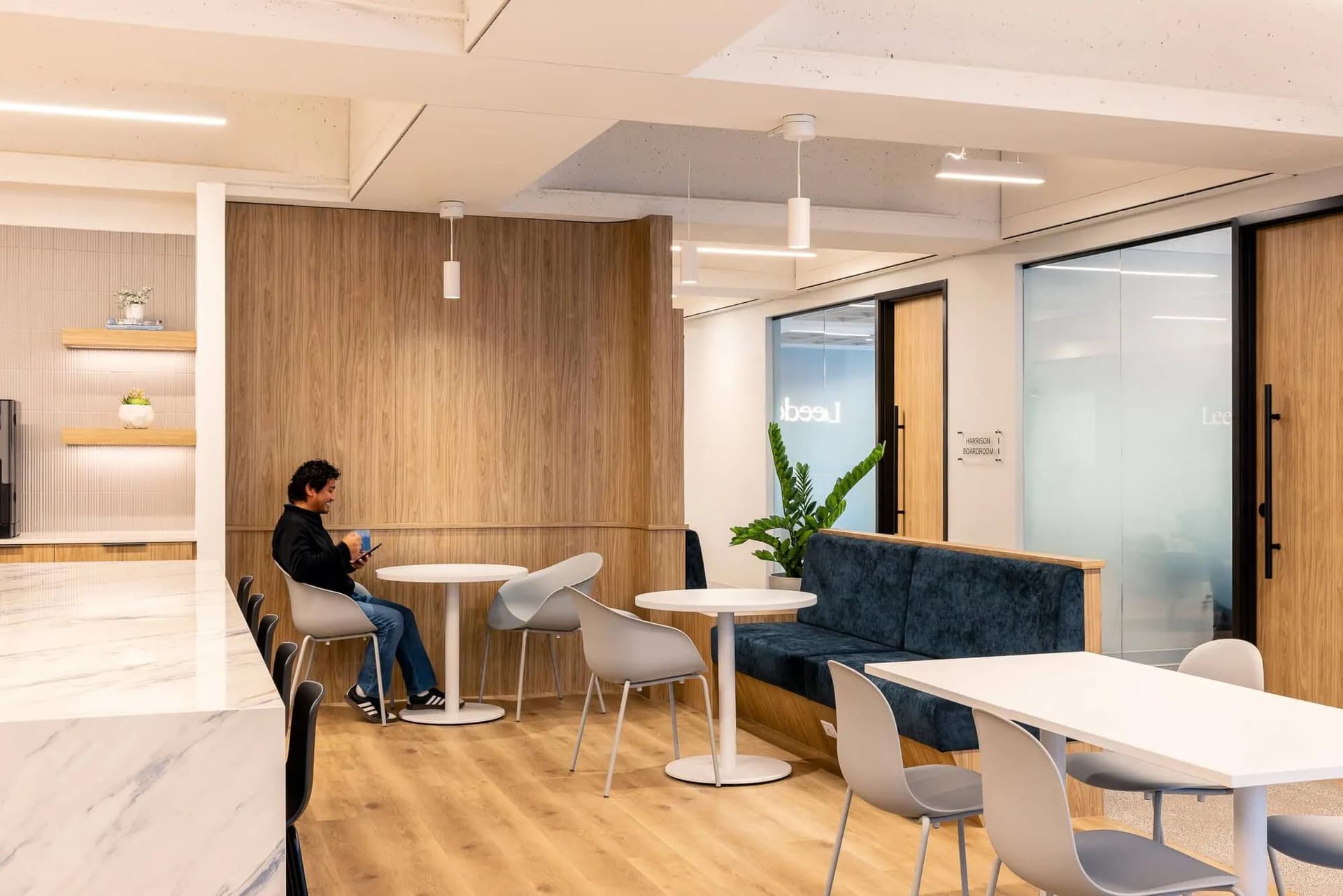
Panellists emphasized that the physical environment plays a crucial role in fostering connection and creating opportunities for both intentional and spontaneous gatherings. Krista Lauridsen noted that while 85% of offices are still designed for solo work, her team has been rethinking spatial design to support collaboration and community better. ATB Financial intentionally redesigned their workplaces to create “micro moments of connection”, from consolidating printers and supply stations to encourage movement and interaction, to building vibrant hub spaces centred around food, coffee, and flexible seating. Lauridsen highlighted that “food brings people in” and that these shared spaces not only support informal exchanges but also create visibility and a sense of belonging.
Brittany Reardon from Clio echoed this sentiment, describing how even something as simple as a structured hot lunch program can drive organic connection. By serving lunch at a set time rather than leaving it available all day, employees naturally gather, line up, chat, and form new relationships, sometimes sparked by “the complaint of being hangry.” Both panellists underscored that thoughtful environmental design and programming, rooted in human behaviour and social cues, can transform the workplace into a catalyst for authentic connection at every scale.
Question 5: Delivering employee experience programming often requires a close partnership between Facilities, Real Estate, and People & Culture teams.
How has that collaboration evolved in your organization, and have any new roles or structures emerged to make it work more effectively?
Panellists highlighted how the collaboration between Facilities, Real Estate, and People & Culture has evolved into a more strategic, experience-driven partnership shaped by the shift to hybrid work.
At Clio, Brittany Reardon explained that real estate and workplace now sit under the Employee Experience umbrella within the People team, reflecting a shift in mindset from viewing offices as cost centers to seeing them as spaces where culture comes to life. Her team now encompasses workplace, engagement, and internal events functions, all focused on “moments that matter”, from recognition programs to large-scale global gatherings, such as Clio’s annual all-company event for 1,800 employees.
Krista Lauridsen added that technology at ATB Financial has become a critical “fourth leg of the stool,” as hybrid work depends on seamless tech-enabled environments. She described ATB’s Workplace 2030 initiative, which unites People, Real Estate, and Technology to align space design, hybrid policies, and tools. Lauridsen also noted the emergence of a Workplace Experience team, a new structure dedicated to “spatial ownership” and curating the day-to-day employee experience. As she put it, the goal is to ensure that physical spaces not only function but actively enhance productivity, connection, and belonging.
Question 6: Adel, in your leadership lectures, you often discuss how adaptive challenges — those complex, sticky problems that don’t have a single solution — require leaders to consider place, people, and practices.
Can you unpack that a little for us? How might leaders apply that lens to help their teams navigate connection, learning, and collaboration in hybrid or distributed settings?
Adel Gamar reframed the concept of leadership as something that exists beyond individual leaders: “it’s a collective act that emerges when people come together to tackle complex, adaptive challenges”. He reminded attendees that “you can’t collaborate alone,” emphasizing that true collaboration, co-labour, as its Latin root implies, is inherently hard work that requires diverse perspectives and shared effort.
In hybrid and distributed settings, he urged leaders to focus on connection, not control: building rapport, checking in with empathy, and creating space for authentic dialogue. To help teams navigate these complexities, Gamar suggested applying three guiding questions: What are we doing well? What do we need to stop doing? And how might we innovate? This framework, he explained, helps surface insights from within the group, encourages continuous learning, and builds ownership across the team.
Ultimately, adaptive leadership is less about having the answers and more about creating the conditions for collective progress, where collaboration, reflection, and small acts of human connection drive meaningful change.
Question 7: Brittany, you worked extensively with psychometrics and continuous listening at Clio.
How are you using those tools to understand belonging and connection across your workforce, and what have you learned that’s influenced how you design experiences?
Brittany Reardon shared how Clio transitioned from annual engagement surveys to a continuous listening strategy, allowing the company to capture real-time insights into employee belonging and connection. Using psychometrics and monthly pulse surveys, Clio now gathers randomized subsets of questions across the workforce, providing leaders with live dashboards that reflect changing sentiments and enabling the team to measure the impact of connection activities more precisely. This data-driven approach revealed that, while vocal opponents to returning to the office existed, the majority of employees experienced stronger engagement and a sense of belonging, especially after in-person gatherings.
Krista Lauridsen added that ATB Financial took a similar real-time approach by collecting spatial data through pilot spaces equipped with utilization sensors, access card tracking, and quick surveys. These insights informed how the organization co-created its future workplace investments, “by our team members, for our team members,” ensuring both design and culture were grounded in the lived experience of employees.
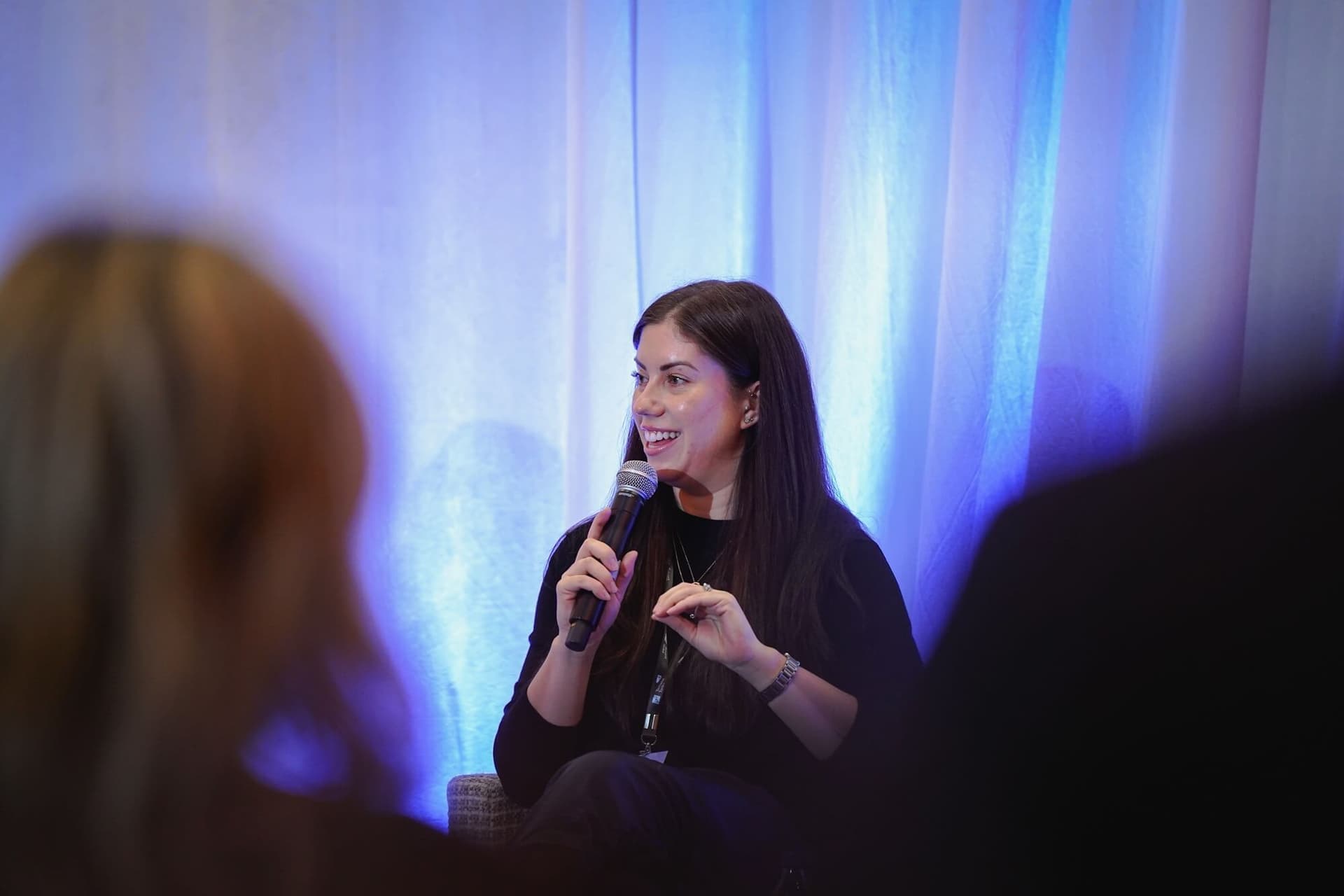
Question 8: What advice would you give to other organizations that want to increase their programming and create more intentional gathering opportunities?
When asked how organizations can create more intentional opportunities for gathering, the panellists emphasized experimentation, leadership alignment, and purposeful design.
Krista Lauridsen encouraged organizations to “test, iterate, learn, and co-create,” reminding leaders that they won’t get it right the first time and that success depends on involving employees in the process. She also emphasized the need to redesign physical spaces, from individual-focused to connection-focused environments, and to strike a balance between structure and inspiration, or as she put it, “the carrot and the stick.”
Brittany Reardon echoed the importance of this experimentation but added that “the tone from the top” is critical. Investing in connection requires resources and cultural commitment, she said, and leadership must model the value of belonging through actions, such as Clio’s CEO personally recognizing every employee’s service anniversary during monthly town halls.
Finally, Adel Gamar reframed the conversation around inspiration, urging leaders to continually ask, “What intentional activities and purposeful events can enrich our workplace culture in a hybrid world?” By bringing people together to explore that question, he noted, organizations can transform challenges into opportunities for collaboration, learning, and revitalizing their culture.
About TenantTalks
TenantTalks is a global nonprofit speaker series focused on the ways of working that are impacting how organizations function today and in the future. Featuring speakers from various industries, disciplines, and locations worldwide, our educational events bring leaders together to discuss their personal experiences, challenges, and ideas on the use of the office and the evolving ways we work.
With the simple goal of providing a platform for collectively shaping the office of the future, TenantTalks operates as a nonprofit project. All proceeds from ticket sales are donated to charities worldwide dedicated to making a difference in our communities.
We are grateful for your contributions to this enriching learning experience and invite you to our next event for further insightful discussions. We look forward to seeing you at our next event!