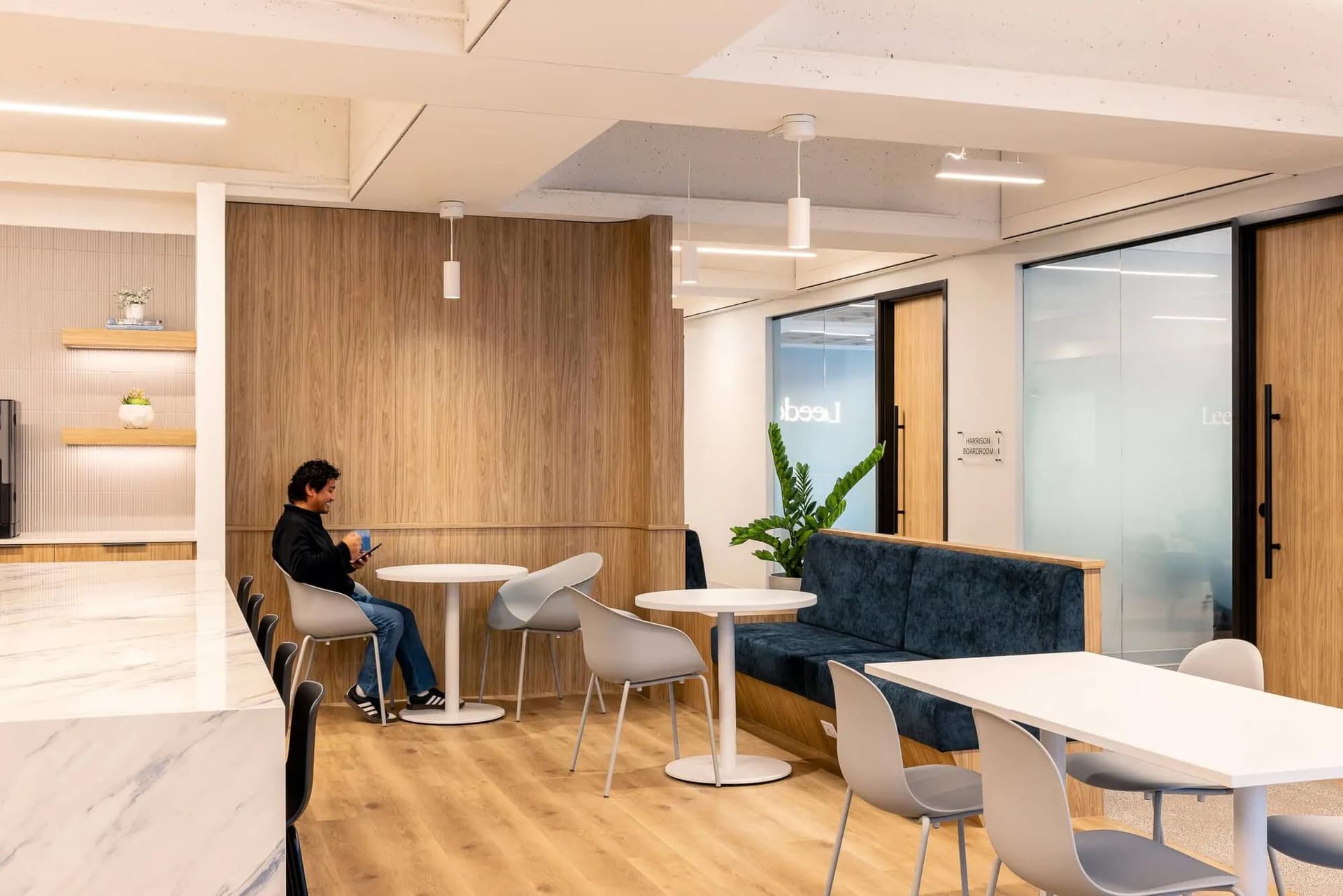
What is Workplace Strategy?
A well-defined workplace strategy can lead to happier employees, better performance, and a stronger organization. Learn more today.
Both employees and employers alike are experiencing an increasing level of uncertainty nearly every day. A thoughtful workplace strategy provides clarity amid that uncertainty. It prepares your organization for multiple plausible futures, allowing it to make small shifts to adapt as more clarity emerges.
Workplace strategy, when done well, is about more than space. It encompasses social norms, programming, change readiness, policies and technology. These elements work together to support how work actually happens. Furthermore, when companies align environment, behaviours, and systems with what their organization is trying to achieve, they can adapt with intention rather than react to change.
This article delves into the core aspects of workplace strategy, how it differs from real estate strategy, and provides a roadmap for organizations looking to create a compelling and effective workplace environment.
Understanding Workplace Strategy
Workplace Strategy is a foundational strategy for an organization’s people and business strategies. It is the process of aligning the organization’s workplace to support its strategic business goals while optimizing workers’ workplace experience and performance.
Most organizations carefully craft their business strategies, setting ambitious goals and implementing processes to achieve them. They recognize that a robust people strategy—focused on attracting and retaining top talent, fostering continuous training and development, and investing in a positive culture—is crucial to their success. However, the need for a deliberate, well-defined workplace strategy is often overlooked. By intentionally implementing such a strategy, companies can ensure that their business and people strategies are fully supported, ultimately driving greater success and sustainability.
The Value Proposition of Workplace Strategy
A well-crafted strategy offers several key benefits:
- It elevates the overall employee experience by designing spaces that cater to various work modes, providing employees with the flexibility, autonomy and resources they need to thrive.
- It enhances employee performance by aligning the physical workspace with employees’ needs, driving higher levels of productivity and innovation.
- Strategically designed workplaces facilitate better employee collaboration, spurring innovation as diverse teams come together in environments conducive to sharing ideas and solving problems.
- An appealing and functional workplace is also a powerful tool for attracting and retaining top talent. In an era of high employee expectations, providing a workspace that supports their needs can be a key differentiator in the competitive talent market.
- A workplace strategy aims to optimize space utilization, ensuring that every square foot contributes to the organization’s goals. This translates into cost savings and more effective use of resources.
- By incorporating actual utilization data and employee feedback, workplace strategy enables better decision-making, allowing organizations to make informed choices about space allocation, design, and resource investments.
Why is investing in a Workplace Strategy Critical?
Workplace strategy has become a critical priority as organizations face rapid shifts in how, where, and why work happens. It’s no longer just about designing a physical office; it’s about creating a work environment that enables people to perform at their best, feel supported, and stay connected to the organization’s purpose.
Today’s workforce expects more; employees want flexibility, meaningful cultural alignment, opportunities to grow, and spaces (both physical and digital) that support their well‑being. At the same time, the rise of hybrid work, third spaces, and distributed teams has fundamentally changed the role of the workplace. A modern strategy must account for this expanded landscape, ensuring that every environment where work occurs is intentional, cohesive, and aligned with organizational goals.
In this context, a well‑defined workplace strategy becomes essential. It helps organizations understand evolving employee needs, clarify the purpose of their spaces, and create environments that support collaboration, focus, learning, and connection, wherever work takes place.
How Does Workplace Strategy Differentiate from a Real Estate Strategy
A real estate strategy focuses on space typologies and the amount of space an organization will need in the future. It involves assessing current space usage, workforce size, and growth projections to make informed decisions about space requirements. In contrast, workplace strategy goes beyond space considerations. It involves listening to employees, gathering data, and observing how spaces are used to ensure the work environment aligns with the organization’s culture, mission, and values.
While real estate strategy is critical for space planning, workplace strategy integrates employee feedback and data to shape work modes and behaviours. This alignment supports the organization’s people and business strategies, ensuring that the physical workspace supports organizational efficiency.
How to Begin Developing a Workplace Strategy
Developing an effective workplace strategy starts with understanding how your people work today and what your organization needs for the future. Companies that do this well take a holistic view, encompassing everything from culture, employee experience, work patterns, and the role space plays in supporting performance. From there, it is critical to explore how behaviours, expectations, and business priorities are evolving, especially in a world shaped by rapid technological change and shifting economic pressures. The most successful strategies translate these insights into clear principles that guide workplace decisions, ensuring that space, culture, and operations work together to support both people and performance.
How Aura Can Help
For organizations looking to build this kind of thoughtful, evidence‑based approach, Aura provides support at every step. Through research‑driven insights, employee-centred analysis, and strategic guidance, Aura helps companies move from questions to clarity, shaping workplaces that reflect their brand, empower their teams, and adapt to the future of work.
Contact us today to see how we can help develop a workplace strategy for your organization.