The Cost of Underutilized Office Space and How to Overcome It
With workplace utilization rates averaging just over half of capacity, many organizations are paying full price for office space that delivers only a fraction of its potential value. The consequences, however, reach beyond the financial and real estate expenses. Empty desks, uneven attendance patterns, and outdated workplace layouts can weaken collaboration, diminish employee engagement, and reduce the value employees gain from coming into the office. Discover how forward-thinking organizations are addressing the hybrid work challenge by optimizing space, balancing occupancy, and creating experience-driven workplaces that truly earn the commute.
Office real estate is one of the largest costs on a company’s balance sheet, but for some organizations, a substantial portion of that investment sits unused. A significant gap has emerged between the space companies pay for and the space employees use. With average office utilization rates hovering around 56%, many workplaces are operating at just over half of their intended capacity.
Underutilized office space goes beyond just financial; the hidden costs are often more damaging than companies realize. Beyond wasted square footage, underutilization can negatively affect employee engagement, diminish collaboration, and weaken the very value proposition organizations use to encourage employees to return to the office.
Financial Reality: Paying for Space That Delivers Little Return
Real estate remains one of the highest operating costs for organizations. Rent, property taxes, utilities, maintenance, insurance, and facility management costs continue whether a space is fully occupied or half vacant.
When offices sit half empty for the majority of the week, companies are effectively paying full price for assets that generate only partial value.
The challenge becomes even more pronounced when average utilization rates mask daily occupancy fluctuations. Many hybrid workplaces experience the now-common “mid-week" peak pattern:
- Mondays and Fridays may operate at 30% occupancy or lower.
- Midweek attendance can surge to 80% or 90%.
- Organizations pay for enough space to accommodate peak demand even though much of that capacity remains unused for most of the week.
This mismatch creates inefficiency at both ends of the spectrum. Space sits idle during quiet periods while employees may experience overcrowding, noise, and limited workspace options during peak attendance days.
How can Companies overcome the mid-week peak issue?
Hybrid work gives employees greater control over when they come into the office, but that flexibility naturally gives way to unusual office attendance patterns.
Some employees plan their office days around family commitments, appointments, commuting schedules, or personal errands, while others prioritize collaboration opportunities, team schedules, or productivity preferences.
As a result, many organizations experience a surge in office attendance during the middle of the week. If you're looking to encourage a more balanced distribution of in-office work across the week, here are several strategies to consider:
Implement Structured Hybrid Models
Structured hybrid models allow companies to assign different fixed days to various departments, which naturally levels out occupancy across the workweek. Furthermore, implementing team anchor days instead of fully flexible attendance helps create a vibrant, active workplace rather than one that feels empty. Involving employees in the decision-making process and giving them a say in selecting anchor days further strengthens engagement and morale.
"Earn the Commute" on Quiet Days
To encourage attendance on Mondays and Fridays, companies can host compelling events or social activities specifically on those days. Making the office a "magnetic,” hospitality-oriented space can help ease the friction of the commute, even on traditionally quiet days.
Eliminate "Dead Zones"
Identifying underused floors through utilization metrics allows companies to consolidate teams onto fewer floors on low-attendance days. This prevents the "frustrating paradox" where employees arrive to find an uninspiring, empty environment.
Beyond the Financials: Underutilization and The Frustrating Office Paradox
Employees are more likely to see value in the workplace when it provides benefits that cannot be easily replicated at home, such as meaningful relationship-building, mentorship, spontaneous collaboration, and direct access to colleagues. Recognizing this, many organizations continue to position the office as a destination for connection, learning, innovation, and culture, using these benefits as strategic drivers to encourage increased office attendance. However, turning it into reality can be difficult, and employees often find that the workplace experience falls short of the promises used to promote it. When employees arrive to find the office with rows of unused desks, quiet hallways, and disconnected teams, the experience rarely lives up to that promise.
This creates a paradox: employees are asked to invest time and effort in commuting, but the workplace does not always deliver value in return. When the experiences that are promised are absent, the rationale for commuting becomes less clear. Employees may begin to question whether the time and effort spent travelling to the office is worthwhile if the workday could have been completed just as effectively from home.
Organizations should therefore ask themselves:
- Are employees finding value in office attendance?
- Does our workplace support meaningful connection and collaboration?
- Is low occupancy affecting engagement, culture, or retention?
How Reduced Office Attendance Impacts Collaboration
As workplace attendance declines, opportunities for connections become increasingly rare. Employees may still collaborate, but interactions are more likely to occur through scheduled meetings, calendar invitations, and virtual calls.
The result is that collaboration becomes more intentional and transactional. Knowledge-sharing slows, cross-functional relationships weaken, and the energy that comes from people naturally interacting throughout the day begins to fade. Over time, this can break down the very culture, innovation, and sense of belonging that employers hope to strengthen through office attendance.
A Workplace Designed for a Different Era
If collaboration, innovation, and culture are among the primary reasons for maintaining a physical office, then underutilization directly undermines those objectives.
Organizations must also consider whether their workplace is set up to support the way people work today. Many offices were designed for an era when employees spent most of their time at assigned desks completing individual tasks. As hybrid work reshapes employee expectations and work patterns, traditional office designs may no longer provide the experiences that make coming into the office worthwhile.
Why Traditional Office Design No Longer Works
Many workplaces were designed for pre-hybrid workstyles. Today's workforce operates differently, with employees visiting the office less often on average, creating uneven occupancy patterns and new demands on the workplace. These changing behaviours present an opportunity for more intentional, experience-driven design strategies
To stay on top of the game, organizations need to shift from static workplace models to dynamic environments that are flexible, adaptable, and focused on employee experience.
Designing Spaces That Employees Actually Want to Use
The challenge of underutilized office space also creates an opportunity to rethink and redesign the workplace to better support employees. Organizations are increasingly adopting a "flight to quality" approach, replacing excess capacity with purposeful, experience-driven spaces that support modern work patterns.
The strategies below outline practical ways to achieve this:
Right-Size the Floor Plan
Identify areas that consistently sit empty and transform them into spaces that better support hybrid work. Unused desk rows can become collaboration zones, focus rooms, lounges, or social gathering areas, depending on what your team needs.
Repurpose Oversized Meeting Rooms
Many organizations discover that large conference rooms are frequently occupied by only one or two people. Splitting these rooms into smaller meeting spaces or phone booths often aligns capacity more closely with actual demand.
Convert Underused Private Offices
Private offices that remain vacant much of the week can be converted into shared workspaces or team neighbourhoods that support flexible attendance patterns.
Adopt Modular Design
Flexible, modular environments allow organizations to adapt quickly as workplace behaviours evolve. Spaces can be reconfigured weekly, monthly, or seasonally to accommodate changing team needs.
Eliminate Dead Zones
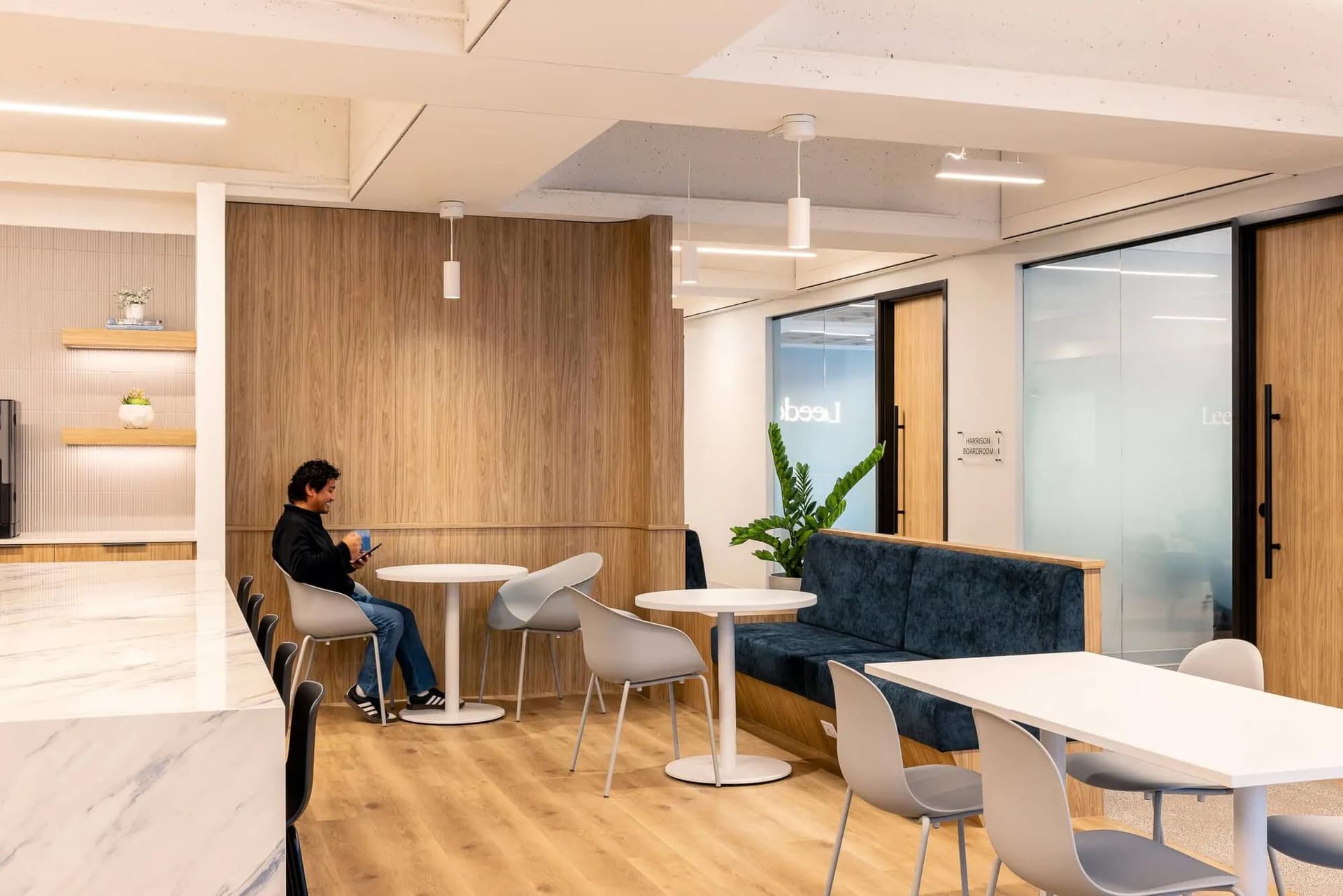
Underused areas should be transformed into active, engaging spaces. Social hubs, touchdown areas, and collaborative zones help create a workplace that feels vibrant and connected.
The Real Cost of Underutilized Space and the Opportunity to Create More Value
Underutilized office space costs far more than unused desks and empty square footage. It creates a ripple effect that impacts employee engagement, collaboration, productivity, retention, and organizational culture.
When employees arrive at an office that feels empty and disconnected, the workplace loses its ability to deliver on its promise. The result is a diminished return on both real estate investments and employee commuting time.
The organizations succeeding today are not focused solely on reducing space; they are redesigning it. In today's workplace, the question is no longer how much office space you have. The question is whether that space is creating enough value to earn the commute.