TenantTalks The ROI of Belonging: Building Culture that Drives Results
Learn key insights from TenantTalks: The ROI of Belonging, where workplace leaders explore how culture, employee engagement, retention, and belonging contribute to stronger business performance and thriving workplaces.
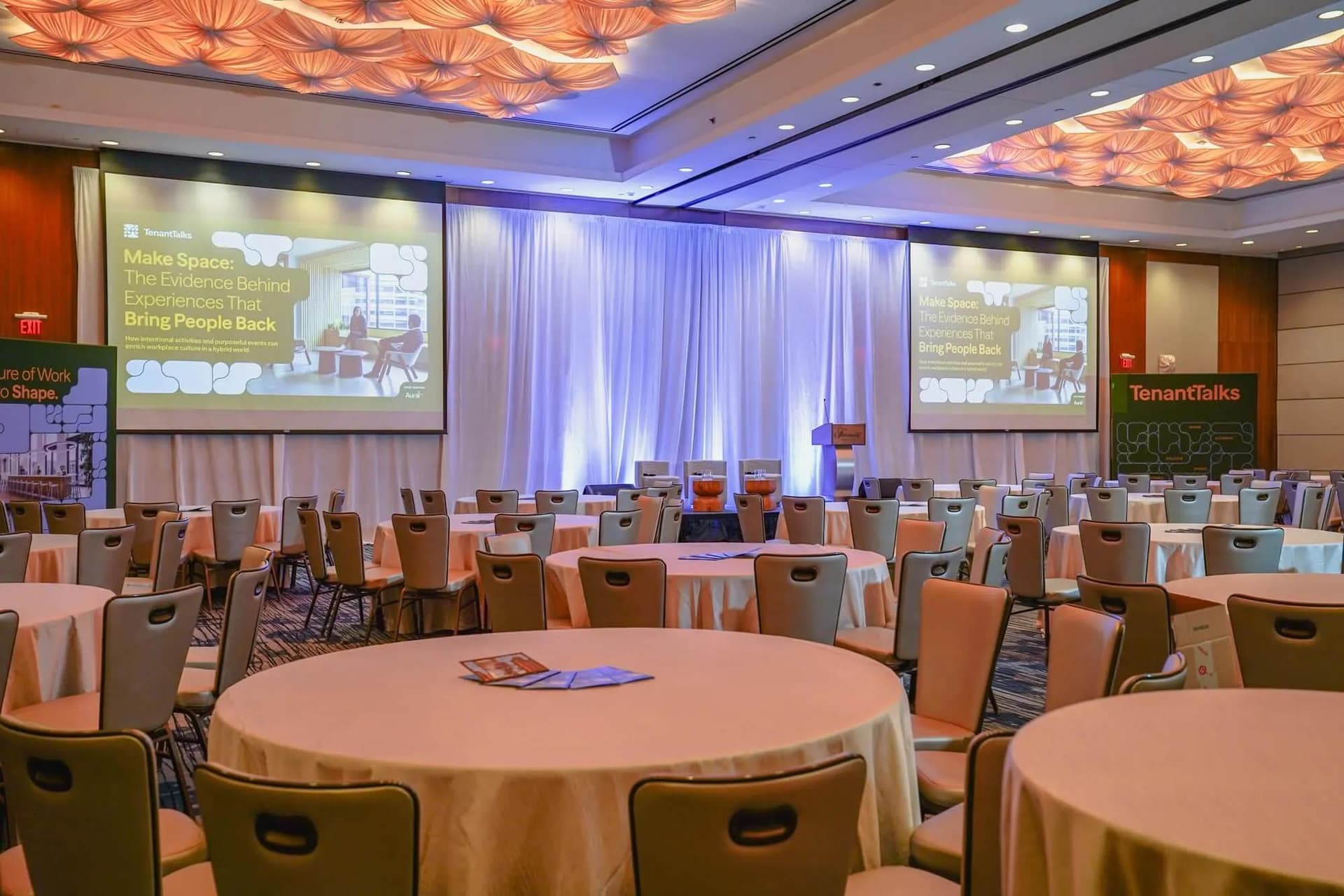
At the latest TenantTalks event, The ROI of Belonging: Building Culture that Drives Results, moderator Robin Rosebrugh, Director of Workplace Strategy at Aura Office, sat down with a panel of leaders from across industries to explore how organizations can build a stronger sense of belonging and how workplace culture can support people and business goals. Joining the discussion were
- Dustin Hutton-Alcorn, Director of People at Intellistack
- Claire MacLean, CEO of Share Society
- Michael Dha, Managing Director of Strive Recruitment
- Vicky Donovan, Manager of People Operations at Site Partners.
Here are some of the key questions explored during the discussion and the insights that resonated most with the audience.

What Does Belonging Mean in the Workplace?
Question: When you hear the term belonging, what does it mean within the context of your organization?
Michael began the conversation by stating that belonging starts with authenticity and creating an environment where people feel comfortable being themselves. When people feel trusted, they’re more willing to innovate, develop creative solutions, and take ownership of challenges, ultimately driving a greater impact across the organization.
Dustin connected belonging directly to innovation, noting that organizations do their best work when employees feel psychologically safe enough to take calculated risks.
"When people feel safe and secure, they're going to take smart, calculated risks. And that's what is going to propel a business forward."
Claire emphasized the importance of welcoming people as whole individuals, not just employees. At Share Society, the diversity of personal experiences people bring into the workplace directly strengthens the organization's ability to serve its community.
Vicky highlighted the connection between belonging and engagement. When employees can clearly see how their work contributes to clients, projects, and business outcomes, they develop a stronger sense of ownership and engagement. Furthermore, employees develop a stronger sense of ownership and a greater desire to push themselves and the organization forward.
Robin reinforced that this relationship between trust and innovation is backed by research. Sometimes taking a risk at work is as simple as asking a question, admitting uncertainty, or giving honest feedback. Belonging creates the conditions that make those actions possible.
How Do You Know Culture Is Working?
Question: What's one indicator that tells you your culture is healthy and working as intended?
Claire started the discussion with a refreshingly simple answer: listen for laughter. If people are genuinely connecting, enjoying one another's company, and comfortable enough to voice concerns when something isn't working, that's often a strong signal that trust exists within the organization.
Michael offered another indicator: internal mobility. While perks and social events are often associated with culture, he argued that one of the strongest signs of a thriving workplace is seeing employees grow into new opportunities within the organization.
When people stay, develop, and take on new responsibilities, it shows that leaders are investing in their success and that employees see a future for themselves within the company.
The discussion also touched on the role of healthy conflict. Rather than avoiding difficult conversations, strong cultures create space for them because employees care enough about the organization and each other to work through challenges together.
Robin referenced The Art of Gathering by Priya Parker, particularly the idea of creating “healthy heat” within teams and organizations. The concept is rooted in the belief that meaningful relationships can withstand and even benefit from constructive tension. When people don't value a relationship, it's easier to disengage or walk away. Choosing to step into challenging conversations, however, reflects a commitment to the relationship and a desire to maintain trust and connection.
Using Culture as a Competitive Advantage
Question: Knowing that culture is a competitive advantage, how are your organizations leveraging it to attract, retain, and engage talent?
Michael stressed the importance of storytelling and building a narrative around why people should come work for them. Every organization has something unique about its people, mission, or journey, but many struggle to communicate it effectively. Employer branding, he explained, starts long before an interview. By celebrating employees, sharing successes, and showcasing growth opportunities, organizations can create a compelling reason for prospective talent to join.
"Employer branding is the magnet. Culture is following through on the promises you made."
Robin built on this idea by encouraging organizations to tell those stories internally and externally. Company history, community involvement, and employee achievements can be showcased within the workplace, giving people a stronger sense of pride and connection.
For Vicky, transparency has become a critical hiring and retention tool. At Site Partners, the hiring process doesn't focus solely on selling candidates on the company; it also involves being honest about expectations, workload, and pace. That clarity helps ensure stronger alignment and reduces the likelihood of mismatched hires.
On the retention side, she noted, it comes down to clear growth pathways. Employees want to understand how advancement happens, how compensation decisions are made, and what opportunities exist for them in the future.
Dustin introduced the panel to the concept of career wealth. In the tech industry, companies must invest in employees’ long-term growth and development.
"We're all going to leave our jobs at some point. The goal is to leave feeling enriched because the organization invested in your growth."
He explained that succession planning and ongoing career conversations help ensure both employee development and organizational continuity. At Intellistack, this approach is supported by its performance management philosophy, Edge Work, which encourages employees to step beyond their comfort zones and pursue growth through ongoing, all-encompassing career conversations. These discussions focus on future aspirations, development opportunities, and succession planning, helping employees build meaningful career paths while ensuring the organization is developing the talent needed for long-term success.

Common Misconceptions About Building Culture
Question: What's one common misconception leaders have about building culture?
When asked what leaders often get wrong about culture, Dustin quickly challenged a common assumption: Culture isn't HR's responsibility alone. While executive leaders set the direction, people across the organization build culture every day. The most successful cultures balance top-down leadership with bottom-up ownership, giving teams a voice in shaping the workplace they want to be part of.
The panel agreed that culture cannot simply be handed down through policies. It requires participation throughout the organization.
Robin shared an example of working with an organization through Aura Office’s workplace strategy program. She helped employees identify their workplace social norms and decide which ones to keep and which to evolve. The exercise demonstrated that culture isn't fixed. Employees can actively influence it by changing behaviours that no longer serve them and reinforcing those that do. As those behaviours spread throughout the organization, they collectively shape and strengthen the culture over time.
Dustin also highlighted the value of open dialogue through initiatives like Ask-Me-Anything sessions and executive councils. Creating opportunities for candid conversations, feedback, and even disagreement helps organizations adapt and improve.
“When people are comfortable being uncomfortable, that's where you're going to drive that change”
Claire added that culture doesn't happen by accident. Leaders must intentionally build systems and processes embedded in the organization. By embedding conversations about culture into onboarding, leadership interactions, and ongoing discussions, organizations can ensure cultural values are consistently reinforced while also allowing the culture to evolve alongside the team.
Who Owns Culture?
Question: Can culture be delegated to People & Culture, or should it be owned by leaders across the organization?
Vicky firmly believes all leaders own culture, and it is not just an HR function. Furthermore, she shared a quote that has stayed with her:
"Your culture is how your employees feel on a Sunday night before the workweek begins."
She challenged leaders to ask themselves a simple question:
What are you tolerating? What are you allowing to happen in the organization? Are your employees seeing poor performance being brushed aside? Are they seeing hard work being rewarded? The behaviours leaders reward, ignore, or allow become powerful signals to employees about what truly matters.
Michael agreed, noting that culture can't be assigned to a single department. Programs and initiatives are valuable, but they only work when leaders and employees actively bring them to life in their daily interactions.
Dustin added that while culture should be owned across the organization, executives still have a responsibility to model it and invest in it. Furthermore, he noted that investment doesn't always have to be financial. Often, it's simply a matter of putting time, energy, and effort into the organization’s culture. Dustin shared examples from high-growth companies that intentionally created opportunities for knowledge sharing, group learning, and communal experiences because they understood that those investments would strengthen culture over time.
Learning from Culture Initiatives that Work
Question: What is a culture-building initiative that has worked and one that hasn’t?
Robin asked the panel to share examples of culture-building initiatives that have succeeded and lessons learned from those that haven't.
Dustin pointed to the workplace itself. He mentioned that a purpose-built office can create opportunities for spontaneous interactions and conversations that strengthen relationships across teams. In a hybrid world, those moments of organic connection have become increasingly valuable.
Michael reflected on lessons learned early in his career, particularly the challenges of driving participation in culture initiatives from the top down. One realization stood out above the rest: "Culture can't be forced." Mandatory activities often generate resistance rather than engagement. Successful initiatives, on the other hand, tend to be those employees genuinely want to participate in.
Claire shared how Share Society's staff engagement committee has become a key driver of culture. Made up of employees from across the organization, the committee helps shape events, gatherings, surveys, and all-staff initiatives. Because employees themselves guide the programming, participation and engagement are significantly stronger.
Vicky shared a similar lesson. After hearing employees wanted more opportunities for connection, she organized a movie night that attracted only three attendees. Meanwhile, a team-organized Gilmore Girls-themed potluck was an overwhelming success. The experience reinforced a simple but important principle: ask people what they want rather than assuming you already know the answer.
Maintaining Culture When Budgets Are Tight
Question: When budgets tighten, culture initiatives often come under scrutiny. How do you maintain momentum and investment during uncertain times?
As organizations navigate ongoing economic uncertainty, Robin closed the discussion by asking how leaders can maintain momentum when budgets come under pressure. The panel agreed that culture should not be viewed solely as a line item on a budget.
Dustin emphasized that many of the most impactful initiatives require time, not money. Whether it's peer recognition, knowledge-sharing sessions, learning opportunities, or even a weekly trivia game, meaningful connection doesn't need to be expensive.
Vicky echoed the importance of understanding what motivates employees and finding opportunities that support their growth. Stretch assignments, new challenges, development opportunities, and increased responsibility often drive engagement just as much as traditional social events. Most importantly, she noted, leaders need to continue listening.
When organizations understand what matters to their people, they can make smarter decisions about where to focus their energy and resources.


Creating Workplace Experiences People Want to Join
Question: How can organizations create workplace experiences that people genuinely want to participate in?
For Dustin, the answer comes back to purpose. People are willing to invest their time and energy when they see value in the experience. Whether it's commuting across the region to attend an industry event or coming together with colleagues, participation is driven by meaning, not mandates. He challenged the idea that simply bringing people into an office automatically creates connection.
"Five days a week in the office doesn't equal connection."
Instead, organizations should focus on creating moments of purposeful collaboration. At Intellistack, that means intentionally bringing teams together for brainstorming sessions, whiteboarding, strategic planning, and meaningful relationship-building before empowering employees to return to their preferred work environments and execute.
Claire shared a similar perspective. At Share Society, being together in person isn't about oversight or control; it's about supporting the organization's mission. When employees understand why collaboration matters and how it helps them better serve clients and communities, participation becomes much more natural.
The discussion highlighted an important lesson for leaders navigating hybrid work: people are more likely to engage when workplace experiences have a clear purpose. If employees perceive an initiative as arbitrary, it creates resistance. When they understand its value, engagement follows.
Advice Leaders Can Implement Tomorrow
To end the discussion, Robin asked each panelist to share one piece of practical advice that leaders could take back to their organizations immediately.
Vicky encouraged leaders to start by looking inward. Are there difficult conversations you've been avoiding? Team members you haven't checked in with recently? Opportunities to better support your people? Belonging begins when leaders take the time to genuinely understand what their employees are experiencing, what they're striving toward, and where they may need support.
Claire echoed that sentiment, emphasizing the importance of visible leadership. Despite the demands of running an organization, she makes a point of connecting with employees personally, learning what's happening in their lives and staying connected to what matters most to them.
"How conscious am I being as a leader about the culture that I am creating?"
For Dustin, building belonging requires a willingness to experiment. Drawing inspiration from The Magic School Bus, he left attendees with a memorable reminder: "Take chances, make mistakes, get messy." He encouraged leaders not to fear failure when trying to create better workplace experiences. Some initiatives will succeed, others won't, but employees notice when leaders are willing to be vulnerable, listen, and keep trying.
Michael offered a simple practice that has become a meaningful tradition at Strive Recruitment: a weekly icebreaker where team members take turns asking thoughtful questions. While the activity takes only a few minutes, it creates opportunities to understand colleagues more deeply and strengthens relationships across the organization.
He closed by reminding everyone that belonging and growth are deeply connected. When employees can clearly see their future within an organization, they are more likely to remain engaged and committed. When growth stalls, employees often begin looking elsewhere.
"Belonging exists where individual growth and organizational growth reinforce each other."
What TenantTalks Taught Us About Belonging, Culture, and Better Leadership

If one message carried through every answer, it was this: belonging is built through intentional actions, not isolated initiatives.
Throughout the discussion, the panel repeatedly returned to the same themes: trust fuels innovation, transparency builds engagement, growth drives retention, and meaningful connection requires intention. Whether through honest conversations, visible leadership, career development, or opportunities for people to contribute, the organizations represented on stage showed that culture isn’t something you create once and move on from. It requires ongoing attention and investment.
Perhaps the strongest takeaway of the day was that People & Culture teams, a specific committee, or a single initiative don’t own belonging. It belongs to everyone. Leaders set the tone, teams bring it to life, and together they create environments where people feel valued, supported, and inspired to do their best work.
As the panel made clear, when people thrive, businesses do too. And that’s the true ROI of belonging.